


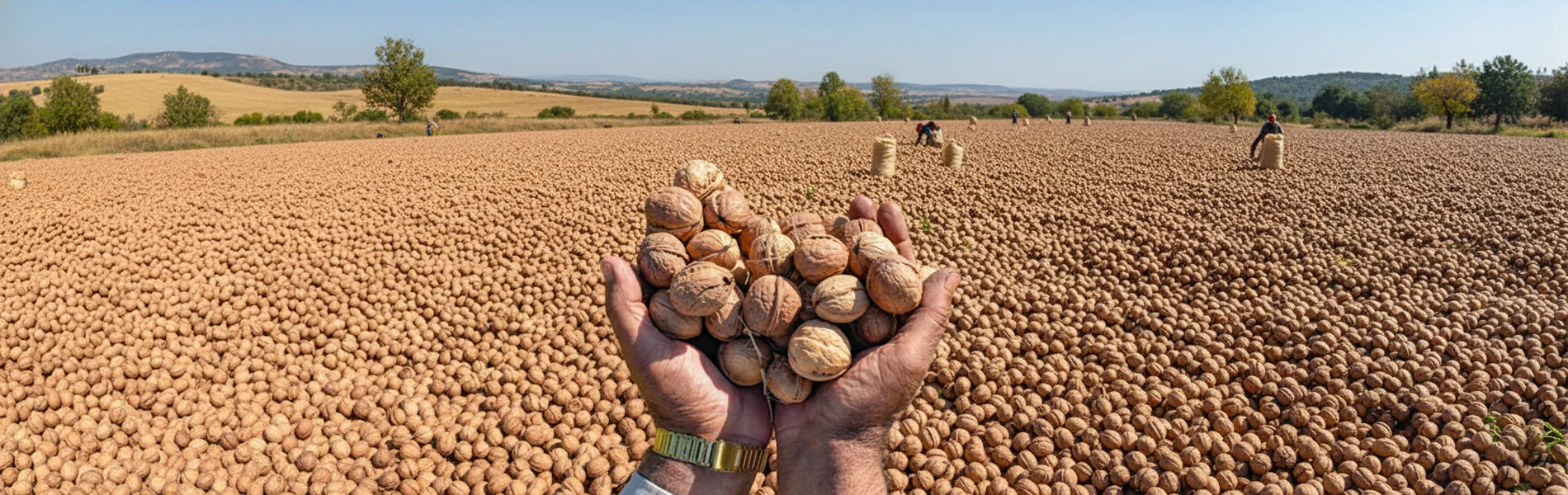
Walnut Farming in Kashmir Offers Strong Returns, but Labour Costs Remain a Major Challenge
Walnut cultivation has long been an important part of Kashmir’s agricultural economy, offering growers the possibility of strong financial returns. But behind those returns is a challenge that many farmers know well: producing walnuts requires significant labour, particularly during harvesting and orchard management.
A study based on 240 walnut growers across four districts of South Kashmir has highlighted both the economic potential of walnut farming and the challenges that continue to affect productivity and profitability.
The research examined walnut production in Anantnag, Pulwama, Kulgam and Shopian using field data from the 2018–19 production period. According to the study, walnut cultivation generated Rs 5.35 for every rupee invested, resulting in a cost-benefit ratio of 1:5.35.
For orchards containing around 80 walnut trees per hectare, researchers estimated production at approximately 3,560 kilograms per hectare. The total cultivation cost was estimated at Rs 83,825 per hectare, while gross returns were around Rs 5.31 lakh. After accounting for cultivation expenses, the estimated net return was approximately Rs 4.48 lakh per hectare.
However, the figures also reveal how dependent walnut farming can be on human labour. Labour accounted for nearly 80 per cent of the total cultivation expenditure recorded in the study.
Harvesting, picking and protecting orchards were among the activities requiring considerable labour throughout the production cycle. For growers, this means that even when walnut production offers attractive returns, rising labour requirements and availability can have a significant impact on the overall economics of farming.
The study also found differences in the prices received by growers. During the study period, walnut prices ranged from approximately Rs 100 to Rs 165 per kilogram. The price varied according to characteristics such as shell hardness, kernel colour, taste and dryness.
Productivity was influenced by several agricultural and social factors. The researchers identified the use of farmyard manure and chemical fertilisers, labour availability, tree density, participation of women and farmers’ access to agricultural information as factors associated with walnut production.
For many growers, however, the challenges went beyond production itself. The study identified limited access to agricultural extension services, credit facilities and technical training as important constraints facing walnut farmers.
The researchers suggested that stronger agricultural extension programmes could help farmers gain access to better cultivation knowledge and practices. Improved institutional credit and technical training were also recommended to help growers address production challenges and strengthen the walnut sector.
Another important recommendation was the wider dissemination of scientific information among farmers. Better access to practical agricultural knowledge could help growers adopt improved orchard-management techniques and make more informed decisions about production.
The study offers an important look at the economic structure of walnut cultivation in Kashmir, particularly the balance between production costs, labour requirements and potential returns. It also shows that profitability alone does not tell the complete story of farming. Access to workers, agricultural knowledge, financing and technical support can all influence what farmers ultimately earn.
At the same time, the financial figures in the study should be viewed in their historical context. The research was based on production data from 2018–19, meaning its reported costs, prices and returns should not be interpreted as current 2026 walnut market prices or present-day farm incomes.
For Kashmir’s walnut growers, the broader message remains relevant: the region has significant potential for walnut production, but unlocking that potential requires more than good harvests. Better access to knowledge, finance, labour and modern agricultural support can play an important role in building a more productive and sustainable walnut sector.
Behind every walnut reaching the market is an orchard, a farmer and months of work. Understanding those realities is essential when discussing the future of Kashmir’s walnut industry.