


New Zealand PM Christopher Luxon Survives Second Leadership Challenge Ahead of Election
New Zealand Prime Minister Christopher Luxon has survived another challenge to his leadership, securing the backing of his governing National Party less than three months before the country heads to the polls.
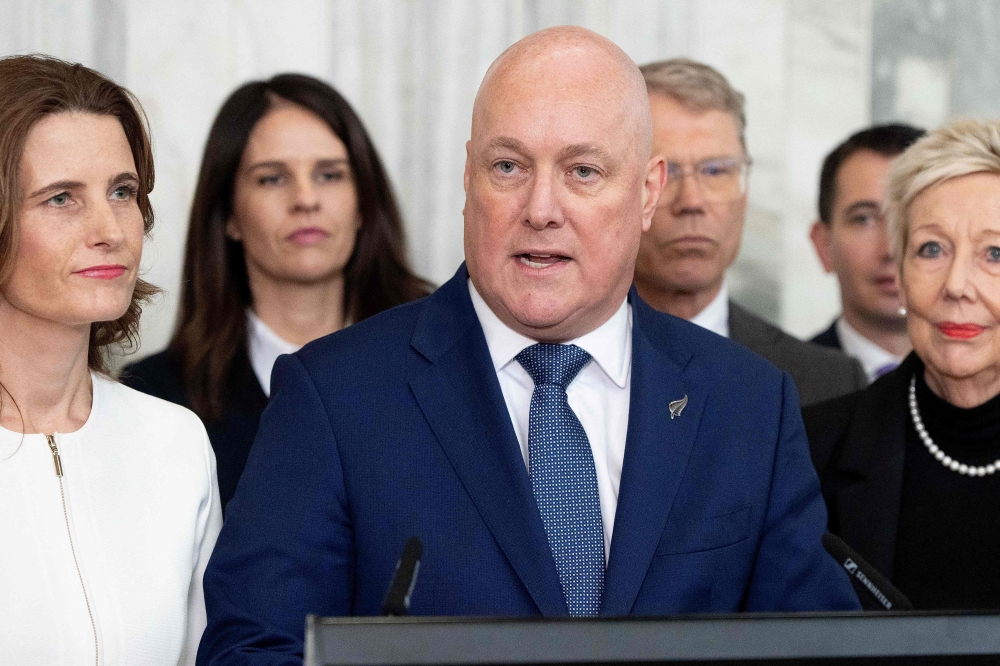
Luxon confirmed after an emergency caucus meeting that he continues to have the confidence of his party colleagues, despite growing concerns about falling support, political divisions and the government’s struggles with rising living costs and unemployment.
“There was a confidence vote in my leadership this morning at our caucus meeting, and I have the full support of our caucus,” Luxon told reporters.
He added that the party was united and focused on winning the upcoming election.
“We’re going back to work, and we’re moving on,” he said.
Another Leadership Test for Luxon
The latest confidence vote marks the second leadership challenge Luxon has faced this year.
In April, he survived another vote after concerns emerged over National Party polling, which had fallen below 30 percent.
This time, pressure intensified after reports suggested that some within the party were questioning whether Luxon could lead National into the November election.
Luxon was accompanied by two senior ministers who had been mentioned as possible leadership contenders, Chris Bishop and Erica Stanford, when he addressed the media following the meeting.
Stanford, the Immigration Minister, had recently attracted attention after declining to publicly commit her support to Luxon. Bishop, a former tobacco lobbyist who has long been viewed as someone with leadership ambitions, publicly backed Luxon during the latest political uncertainty.
Members of the National caucus leaving the meeting described the party as united and firmly behind the prime minister. However, they stopped short of confirming that Luxon had received unanimous support.
A Premiership Under Growing Pressure
Luxon became prime minister after leading the centre-right National Party to victory in the 2023 election.
A former Air New Zealand chief executive, he entered politics promising to tackle inflation, improve economic conditions and help bring down interest rates.
His background in business helped shape his political image as a strong negotiator. But forming and managing a coalition government proved more complicated than expected.
National eventually formed a three-party government with New Zealand First and ACT after more than six weeks of negotiations.
Since then, tensions within the coalition have repeatedly tested Luxon’s leadership.
Political missteps, public disagreements and controversial comments from coalition partners have also created additional challenges for the prime minister.
One recent controversy involved Foreign Minister and New Zealand First leader Winston Peters, who made remarks directed at a Chinese-born lawmaker during a parliamentary debate.
The comments triggered criticism from Beijing. Luxon described the remarks as offensive and racist but did not impose sanctions on his coalition partner.
Peters later dismissed the leadership challenge as “much ado about nothing” and argued that the government needed to focus on presenting voters with a clear and united message before the election.
Political Missteps Add to the Pressure
Luxon has also faced criticism for comments directed at small-business owners, an important constituency for the National Party.
His description of some business owners as having a “parent-child mentality” toward the government attracted backlash.
More recently, Luxon proposed holding a referendum on New Zealand’s mixed-member proportional representation electoral system.
The proposal surprised members of his own government and was widely viewed as politically risky.
With the election approaching, the pressure surrounding Luxon is no longer simply about his personal popularity. It is increasingly tied to the National Party’s ability to maintain support and prevent senior ministers and lawmakers from losing their parliamentary seats.
What Happens Next?
For now, Luxon remains in charge and has secured another vote of confidence from his caucus.
But surviving a leadership challenge does not automatically solve the political problems facing his government.
The next few months will be crucial. Voters will ultimately decide whether Luxon and the National-led coalition deserve another term in office.
With the election scheduled for November 7, the political spotlight will remain firmly on Luxon as he attempts to turn internal uncertainty into an effective election campaign.
The latest development highlights a wider reality of modern politics: surviving a leadership challenge may buy a leader more time, but winning back public confidence requires much more.
New Zealand voters will have the final say.