


Iran says no military solution to US war as talks over Strait of Hormuz hit impasse
Iran’s top diplomat has said there can be no military solution to the ongoing conflict with the United States, as negotiations over the future of the strategically important Strait of Hormuz appear to have reached a difficult standstill.
Foreign Minister Abbas Araghchi said Iran would continue defending itself if military confrontation resumed, while insisting that negotiations based on what Tehran considers fairness and justice remain the only realistic path toward ending the conflict.
The comments come after weeks of heavy fighting involving the United States, Israel and Iran. Despite extensive bombardment, the conflict has not produced a decisive outcome. Washington has more recently shifted some attention away from direct military operations and toward economic pressure and restrictions on Iran.
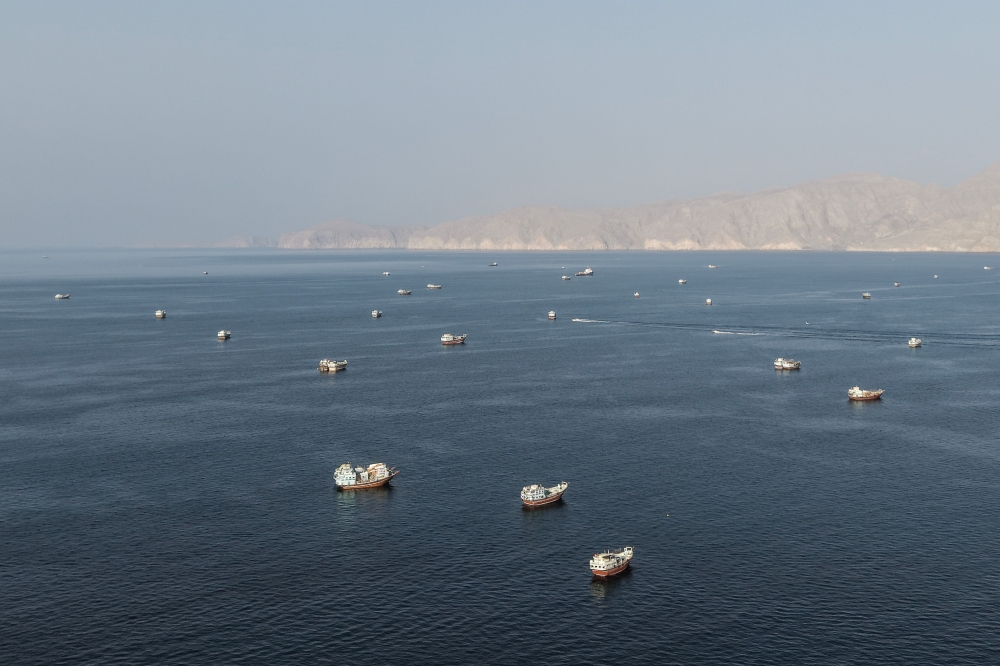
At the heart of the latest dispute is the Strait of Hormuz, one of the world’s most important maritime routes for energy shipments. The waterway has become a major flashpoint after Iran sought to restrict shipping through the strait, while the United States imposed its own measures against Iranian ports and vessels.
Speaking to foreign ambassadors, Araghchi warned that any renewed military action against Iran would trigger a stronger response.
“If our enemies again choose the path of military confrontation, our response will be stronger than before,” he said, arguing that neither military action nor additional sanctions could provide a lasting solution.
The situation became even more tense after the United Kingdom Maritime Trade Operations agency reported that a tanker travelling through the Strait of Hormuz had reported being hit by an unidentified projectile. The incident reportedly caused damage to the vessel’s engine room, although the crew was safe and no environmental damage was reported.
Authorities have not publicly identified the vessel’s origin or destination, nor confirmed whether it was carrying crude oil, petroleum products or liquefied natural gas. The uncertainty surrounding the incident has added another layer of concern for international shipping companies operating in the region.
The Strait of Hormuz has become increasingly important in the diplomatic negotiations because disruptions there can have consequences far beyond the Middle East. The route is a critical corridor for global energy supplies, meaning prolonged restrictions could affect oil and gas markets, transportation costs and economies that depend heavily on energy imports.
Iranian officials have maintained that reopening the waterway is linked to broader demands concerning the conflict and sanctions. Tehran has reportedly called for a regional ceasefire, the release of frozen Iranian assets held overseas, sanctions relief for its oil industry and an end to the US naval blockade.
Iranian Deputy Foreign Minister Kazem Gharibabadi said the United States had communicated its position through intermediaries and that Iranian officials were reviewing the response.
He said Tehran was considering its options while also preparing for other possible developments, reflecting the uncertainty surrounding the diplomatic process.
Iranian Foreign Ministry spokesman Esmaeil Baqaei said the latest US proposal remained closely connected to Washington’s earlier positions on nuclear issues. Tehran, however, has indicated that its immediate priority is the Strait of Hormuz and what it describes as interference with Iranian commercial maritime activity.
The diplomatic dispute is also unfolding against the backdrop of the long-running disagreement over Iran’s nuclear programme. The United States and Israel have argued that military action is necessary to prevent Iran from developing nuclear weapons. Tehran has repeatedly denied that it is seeking such weapons.
The focus of the conflict has nevertheless expanded beyond the nuclear question. The Strait of Hormuz has emerged as one of the most urgent issues because its disruption has the potential to create economic consequences across global markets.
Meanwhile, Iran’s domestic energy leadership has also changed. Iranian Oil Minister Mohsen Paknejad has resigned, with the presidency announcing that Hamid Bovard, chief executive of the National Iranian Oil Company, will replace him.
Iranian officials said Paknejad had previously sought to leave the position for personal reasons, but President Masoud Pezeshkian had initially asked him to remain. The president later accepted his resignation after Paknejad continued to insist on stepping down.
For now, the diplomatic channel remains open, but the gap between Washington and Tehran appears significant. Iran wants sanctions relief and changes to the military and maritime pressure surrounding the country, while the United States continues to keep military options available.
The latest developments show just how quickly a dispute over one shipping route can become a much larger international crisis. For ordinary people watching from outside the region, the Strait of Hormuz may seem like a distant stretch of water, but what happens there can influence fuel prices, shipping costs, inflation and energy security far beyond the Gulf.
The coming days could therefore prove important. If negotiations produce movement, the Strait of Hormuz could become a pathway toward wider de-escalation. If talks fail and military confrontation returns, the consequences could extend well beyond Iran and the United States.
Reporting based on AFP material.