


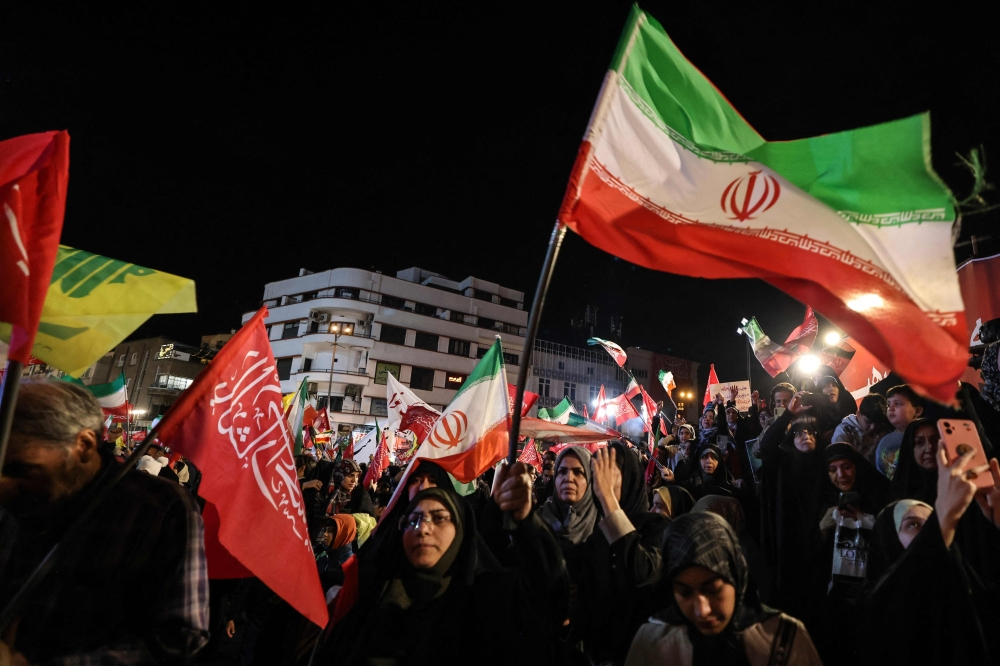
Iran Says Its Military Is Stronger and More Prepared Than When War With US and Israel Began
Iran has claimed that its military is now stronger, more experienced and better prepared than it was when the conflict with the United States and Israel began in February, signalling that Tehran remains determined to defend its position amid continued regional tensions.
According to Iranian state media reports on Saturday, army spokesman Mohammad Akraminia said the country’s armed forces had gained valuable experience through direct confrontations with the United States and Israel. He maintained that this experience had strengthened their operational readiness, confidence and determination.
Speaking through the state news agency IRNA, Akraminia said Iran’s military was now on higher alert and better prepared than it had been at the beginning of the conflict. He also highlighted what he described as increased motivation, commitment and self-confidence among the country’s armed forces.
The conflict, which began following major US and Israeli strikes against Iran in late February, has remained largely deadlocked for months. Despite continued military and political tensions, a lasting resolution has yet to emerge, leaving the region facing uncertainty over what could happen next.
One of the most significant developments has been the situation surrounding the Strait of Hormuz, a strategically important waterway through which approximately one-fifth of the world’s oil consumption normally passes. Any prolonged disruption to shipping through this route could have serious consequences for international energy markets, global trade and economies that depend heavily on oil imports.
Akraminia claimed that Iranian forces continued to maintain control over the strategic waterway and indicated that it would remain closed until the United States accepted Tehran’s demands. Such a position adds another layer of uncertainty to an already tense situation, particularly for countries and businesses dependent on stable international energy supplies.
He further warned that Iran’s military response would be immediate and effective, referring to orders issued by the country’s Supreme Leader. His statement suggested that Tehran was prepared to respond to further military action without limiting its response to a particular geographical area.
Meanwhile, US President Donald Trump confirmed this week that new strikes against Iran had taken place. His remarks followed reports in American media about attacks targeting Iran’s Qeshm Island, located in the strategically sensitive Strait of Hormuz.
On Saturday, Iranian news agency Tasnim reported that two missiles had struck the island, although no official assessment of the damage was immediately available. Iranian state television also reported hearing two explosions in the area.
In a separate development, the Iranian army announced early Saturday that its air defence systems had intercepted and destroyed a US drone flying over Qeshm Island, according to state media. However, the military statement did not clarify whether the island itself had come under attack.
The latest developments highlight how fragile the situation remains, with military statements, reported strikes and growing tensions continuing to shape the conflict. Beyond the immediate confrontation, the uncertainty surrounding the Strait of Hormuz raises concerns for the wider international community, particularly countries watching developments for their potential impact on oil prices, shipping routes and economic stability.
For ordinary people, the consequences of prolonged conflict extend far beyond military headlines. Rising energy costs, disrupted supply chains and uncertainty in global markets can eventually affect households, businesses and economies across the world.
As tensions continue, the international community will be watching closely to see whether diplomatic efforts can prevent further escalation or whether the region faces another prolonged period of confrontation.