


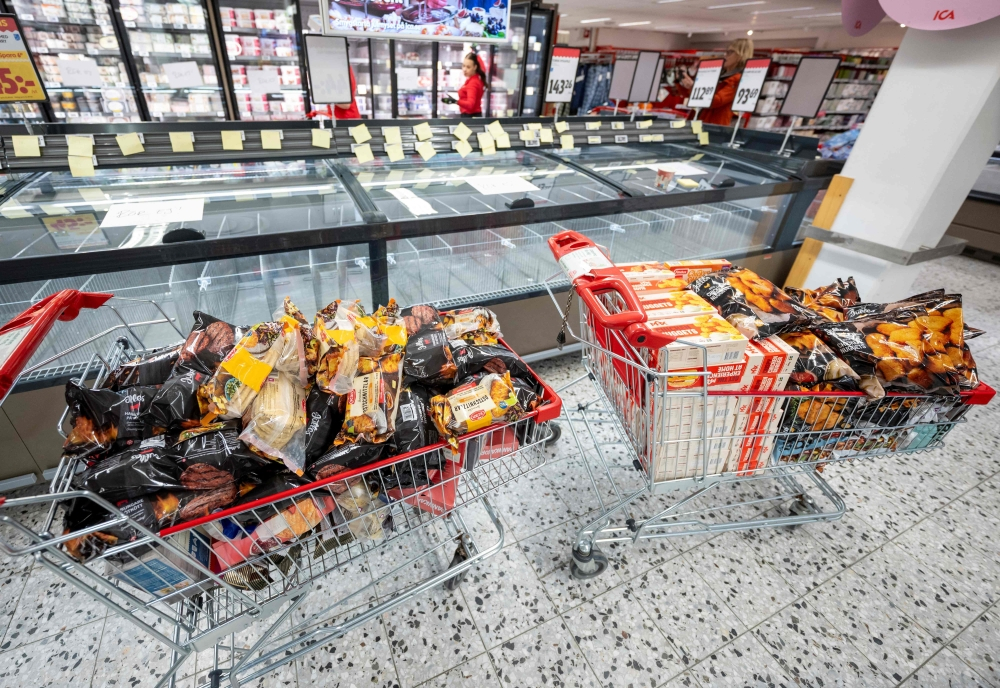
Cyberattacks on supermarket refrigeration systems spread across Europe, raising fears over food supply security
Cyberattacks targeting supermarket refrigeration systems have spread across Europe, with Germany, Romania and the United Kingdom becoming the latest countries affected. The incidents have raised concerns about food safety, business disruption and the growing vulnerability of essential supply chain infrastructure to cyber threats.
What initially appeared to be isolated technical problems is now being treated as a wider security concern. European authorities have warned that attacks on connected refrigeration equipment could have consequences beyond individual supermarkets, potentially affecting the wider food distribution network.
Italy’s government held emergency discussions with intelligence officials following the incidents. The European Union has also begun coordinating with national authorities to assess the situation and develop a collective response.
EU spokesperson Thomas Regnier confirmed that European agencies were working with national authorities to address the growing threat. He stressed that the incidents should not be treated as isolated events, highlighting the importance of preparedness and stronger cybersecurity measures across the region.
However, authorities have not identified those responsible, and the motive behind the attacks remains unknown. No individual or group has publicly claimed responsibility.
The United Kingdom, although outside the European Union, has also reported problems affecting parts of its food supply chain. Britain’s National Cyber Security Centre chief, Richard Horne, told the BBC that the incidents had implications for the wider food industry.
According to Horne, cybersecurity teams worked through the night to alert potentially affected organisations. Officials also identified several cases in which vulnerabilities in older technology had been exploited.
The British Association of Independent Meat Suppliers (AIMS) reported that two of its members experienced refrigeration systems beginning to defrost, while another business saw temperatures inside its cold storage units rise unexpectedly.
These failures are particularly concerning for businesses that depend on controlled temperatures to preserve meat, dairy products and other perishable goods. Even a short interruption can result in significant financial losses and wasted food.
European Commissioner for Agriculture and Food Christophe Hansen described the incidents as a deliberate attempt to disrupt the region’s food supply chain. His remarks underline the seriousness of attacks targeting infrastructure that consumers and businesses depend on every day.
In Italy, authorities said the overall impact remained limited, with incidents primarily affecting commercial outlets using outdated security systems. Around 20 stores were reportedly affected nationwide.
Giuseppe Spadaro, director of a group managing Coop supermarkets in Sicily, said four of the company’s 300 stores had been affected. The damage was estimated at several thousand euros, with spoiled products having to be discarded.
The situation also reached Germany and Romania, where four supermarket outlets and six outlets respectively reported problems, according to officials and company representatives.
Romania’s National Cyber Security Directorate director, Dan Cimpean, told AFP that the incidents appeared relatively unsophisticated. He also said there was no indication that a state actor was responsible.
Meanwhile, supermarket operations in Sweden were also affected. Carlos Cancinos, spokesperson for the Coop retail chain, confirmed that seven stores had experienced refrigeration problems but had since returned to normal operations.
He explained that some of the affected refrigeration equipment and freezers were connected through older 4G networks. The company has since been working on a major modernisation programme, upgrading connected refrigeration systems and moving towards 5G connectivity.
Belgium was among the countries reporting more extensive disruption, with dozens of stores across several supermarket chains experiencing refrigeration failures. Federal prosecutors have opened an investigation into the incidents.
A warning for Europe’s food supply chain
These incidents highlight a growing challenge for modern businesses: the same technology that makes operations more efficient can also create new security risks when systems are outdated or inadequately protected.
Supermarket refrigeration may not immediately come to mind when discussing cybersecurity, but it plays a critical role in food safety, inventory management and daily business operations. When connected equipment is compromised, the consequences can quickly move beyond the digital environment and affect physical goods, employees and customers.
For retailers, the message is clear. Cybersecurity can no longer be treated as an issue limited to computers, websites or financial systems. Every connected device that supports essential business operations needs proper protection, regular security updates and continuous monitoring.
For consumers, the incidents are also a reminder of how closely everyday essentials depend on technology. The security of the food supply chain is not just about transporting and storing products; it is also about protecting the digital systems that keep those products safe.
As investigations continue across Europe, authorities and businesses will need to work together to strengthen their defences. Preventing the next incident may depend on how quickly organisations recognise vulnerabilities, modernise ageing equipment and take cybersecurity seriously.