


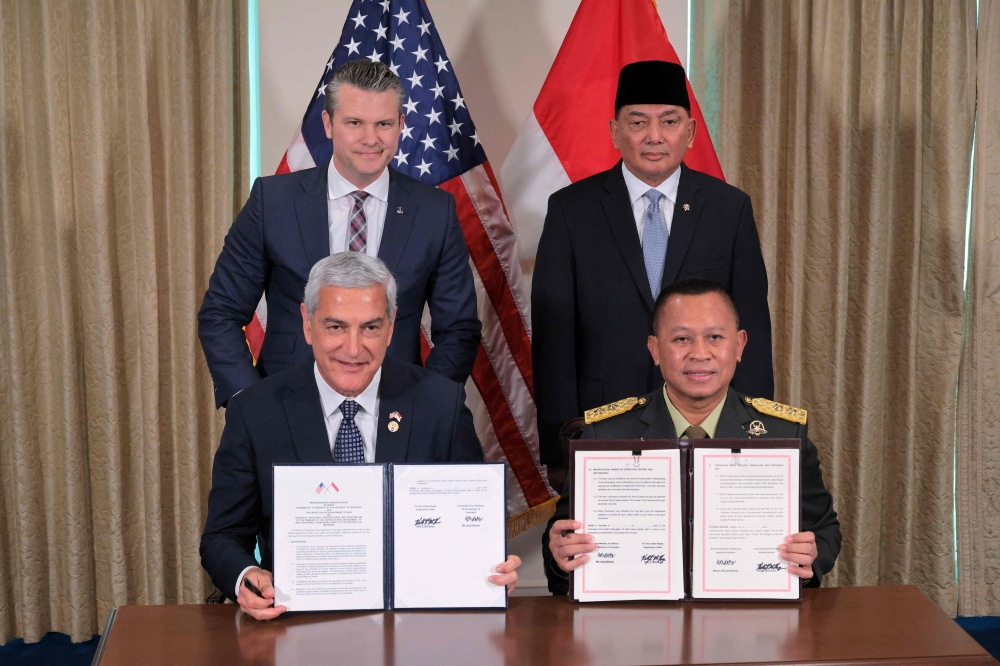
US and Indonesia Strengthen Strategic Ties with Major Defence Partnership
In a significant step toward strengthening bilateral relations, the United States and Indonesia have announced a “major” defence partnership aimed at enhancing cooperation across multiple military sectors. The announcement came from US Defense Secretary Pete Hegseth following a high-level meeting with Indonesia’s defence leadership at the Pentagon.
The newly elevated partnership marks a deeper alignment between the two nations, focusing on key areas such as military modernization, capacity building, professional training, and joint exercises. Both countries emphasized that this collaboration is not just about defence strength, but also about ensuring long-term peace and stability across the Indo-Pacific region.
According to the joint statement, the partnership reflects the growing trust and shared vision between Washington and Jakarta. It aims to improve operational coordination while fostering stronger institutional ties between their armed forces.
Indonesia, while welcoming the initiative, made it clear that its longstanding principles remain unchanged. The country reaffirmed its commitment to a “free and active” foreign policy, ensuring that national interests and sovereignty continue to guide all international engagements.
The Indonesian Ministry of Defense also addressed a proposal from the United States regarding access for American military aircraft through Indonesian airspace. Officials confirmed that the matter is still under careful review and will undergo further technical discussions in line with national procedures.
As Southeast Asia’s strongest military power, Indonesia holds a critical strategic position, particularly along the Malacca Strait — one of the world’s busiest and most vital routes for global energy transportation.
Despite its non-aligned stance, Indonesia has been actively engaging with multiple global powers. Its recent participation in the BRICS bloc, alongside nations like Russia and China, highlights its expanding geopolitical role. At the same time, Jakarta continues to maintain strong ties with Washington, including trade agreements and collaborative initiatives.
This evolving partnership between the United States and Indonesia reflects a broader shift in global dynamics — where cooperation, balance, and strategic positioning are becoming increasingly important.
At its core, this agreement is more than just a defence deal. It represents a careful balancing act by Indonesia, strengthening its capabilities while preserving its independence. For the United States, it signals a deeper commitment to the Indo-Pacific region. For the world, it is another reminder that alliances today are no longer rigid — they are adaptive, strategic, and shaped by mutual interests.