


More than 3,000 missing as Nepal-Tibet flood rescue enters a critical fifth day, with Malaysia joining international relief efforts
Rescue teams in Nepal and China are facing increasingly difficult conditions as they enter the fifth day of a devastating Himalayan disaster that has left hundreds dead and more than 3,000 people missing.
The catastrophic flooding and debris flows swept through communities along the Nepal-China border, destroying settlements, damaging vital infrastructure and leaving families desperately waiting for news of loved ones.
According to the latest figures from both countries, at least 3,044 people remain missing, while 750 deaths have been confirmed. Some bodies are believed to have been carried downstream into India, adding another painful dimension to an already overwhelming rescue and recovery operation.
The disaster struck early Wednesday after what authorities and geological experts described as a glacial collapse triggered an enormous flow of ice, rocks, mud and water through the mountainous region.
The United States Geological Survey said the event sent a powerful wall of water and debris downstream, devastating areas on both sides of the border.
In Tibet, Chinese rescue teams working near the Gyirong border port were temporarily moved to safer locations after another landslide created a newly formed lake, raising fears that additional flooding could threaten rescue operations.
Rescue teams race against time in Nepal
In Nepal, the search continues at the Trishuli 3A hydroelectric project, where workers are believed to be trapped inside a tunnel.
Nepali Army personnel and engineers managed to insert a pipe into the passage, creating a small opening through which air could be sent to those potentially trapped inside.
Nepal’s Home Minister Sudan Gurung said teams had begun sending air through the opening, offering a small but important sign of progress during an extremely difficult rescue operation.
However, overnight rain and rising river levels slowed efforts. Water entered the excavation area, forcing teams to temporarily adjust their operations before conditions improved and rescue work resumed.
Nepal’s disaster authorities have reported that 933 hydropower workers are among those missing, highlighting the devastating impact on the country’s major energy infrastructure projects.
A disaster born from fragile mountain conditions
China’s state news agency Xinhua reported that experts believed a glacier on the southern slope of Lirung Peak in Nepal fractured, triggering an ice-rock avalanche.
The resulting torrent reportedly travelled more than 20 kilometres before reaching Gyirong Port, turning a natural geological event into a disaster with consequences across borders.
UN climate chief Simon Steill described the event as a devastating reminder of how vulnerable mountain environments can be.
The disaster has also created enormous temporary lakes in the affected areas. One of these formations is now being closely monitored because of the possibility of additional flooding.
Chinese and Nepali officials have discussed sharing satellite imagery and hydrological information to better understand the situation and reduce further risks.
Families left waiting for answers
For families searching for missing relatives, the numbers tell only part of the story.
In Nepal’s Nuwakot district, survivor Buddhi Ram Dangol described the destruction in heartbreaking terms.
Entire settlements located near the river were swept away.
At an army base in Bidur that has become a centre for rescue coordination, relatives gathered around lists of rescued people, searching line by line for familiar names.
Kalka Sharda was among those waiting.
She had travelled to the rescue centre looking for her son.
For families like hers, every hour without information brings another layer of uncertainty.
Nepal’s disaster authority said 589 foreigners, including trekkers and Hindu pilgrims travelling toward Tibet’s sacred Mount Kailash, were also unaccounted for.
The Isha Foundation, led by Indian spiritual teacher Sadhguru, said 80 members had been travelling in the region as part of a group trip. The organisation said there were no encouraging indications of survivors at the immigration office area at the time of its statement.
International community responds
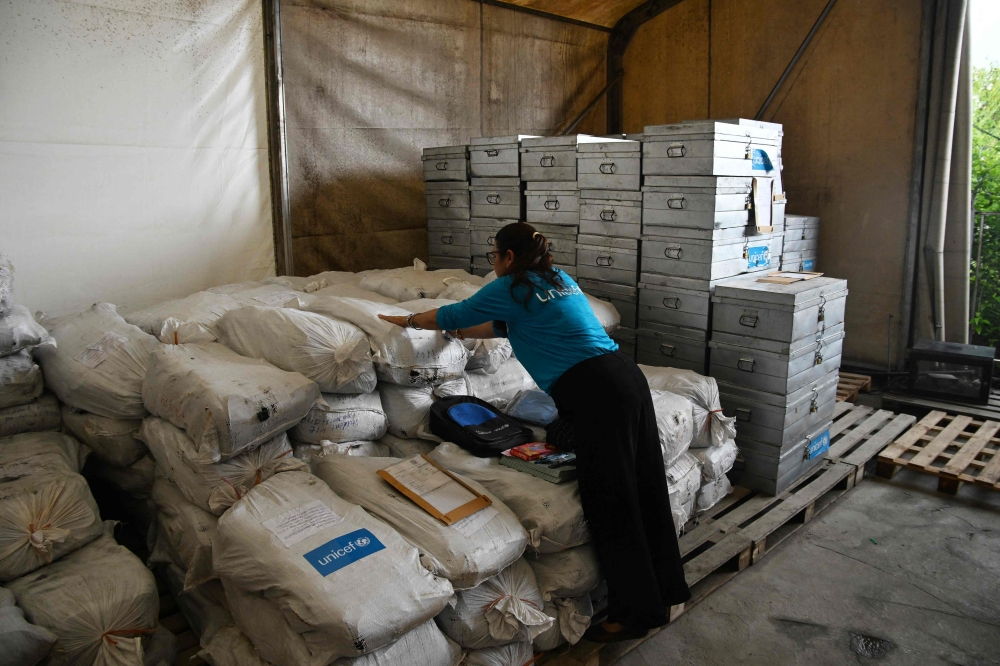
As Nepal struggles with the scale of the disaster, countries and international organisations are stepping forward with emergency assistance.
The United States and Canada have each announced US$3.6 million in humanitarian aid for Nepal.
The United Kingdom has pledged US$6.8 million, while the United Nations has released US$2.5 million in emergency funding.
The European Union has promised US$2.3 million, while the International Federation of Red Cross and Red Crescent Societies has allocated more than US$1 million and launched a wider emergency appeal worth approximately US$31 million.
Nepal is already facing economic pressure, making the scale of the recovery even more challenging. Foreign Minister Shisir Khanal warned that rebuilding costs could eventually reach billions of dollars.
He has appealed for specialised international assistance, including heavy-lift drones and advanced technology capable of helping rescuers locate people who may still be trapped.
Nepal has also requested forensic testing kits to help identify recovered bodies, along with freezer units to preserve them. Officials warned that bodies recovered from floodwaters can deteriorate more rapidly.
Malaysia joins the rescue and recovery effort
Malaysia is also stepping forward.
The Malaysian government has said it will send search and rescue specialists to assist Nepal and contribute US$1 million, approximately RM4.2 million, toward recovery efforts and assistance for victims.
For Nepal, support of this kind is more than financial assistance. With rescue teams working through unstable terrain, rising waters, mud and debris, specialised international expertise could become increasingly important in the days ahead.
Tibet rescue operation faces new flood threat
In Tibet, rescue operations in the hardest-hit area of Gyirong were temporarily suspended because of concerns surrounding the newly formed lake.
Chinese authorities said the lake was naturally discharging and had been essentially drained, reducing some of the immediate danger.
Xinhua reported that around 2,141 rescuers were operating near the Gyirong site, including more than 500 personnel in the most severely affected area.
Authorities have also evacuated 555 stranded tourists and 499 Chinese residents from affected areas of Tibet.
The latest reports from Tibet indicate that 16 people have died and 546 remain missing.
Death toll continues to rise
Nepal’s reported death toll has reached 734, while 2,498 people in the country remain out of contact, including hundreds of foreigners.
Across the border in Tibet, the confirmed death toll stands at 16.
In neighbouring India, officials have recovered seven bodies from rivers flowing from Nepal. They are believed to be connected to the flooding.
The road ahead will be long
The immediate priority remains finding survivors.
But even as rescue teams continue searching, Nepal is already facing the enormous challenge of what comes next: identifying victims, supporting displaced families, rebuilding destroyed communities, restoring infrastructure and preparing for possible secondary flooding.
This disaster has crossed borders, but its human impact is deeply personal.
Behind every missing-person figure is a family waiting for a phone call. Behind every destroyed settlement is a community trying to understand how it will begin again. And behind every rescue operation is a race against time, weather and an unforgiving mountain landscape.
As Nepal and Tibet continue to face the aftermath, international cooperation could make a critical difference.
Malaysia’s decision to send search and rescue specialists and provide financial assistance is one part of a growing global response. For those still waiting for their loved ones, however, the greatest hope remains simple: that the next name added to a rescue list is the name they have been desperately searching for.