


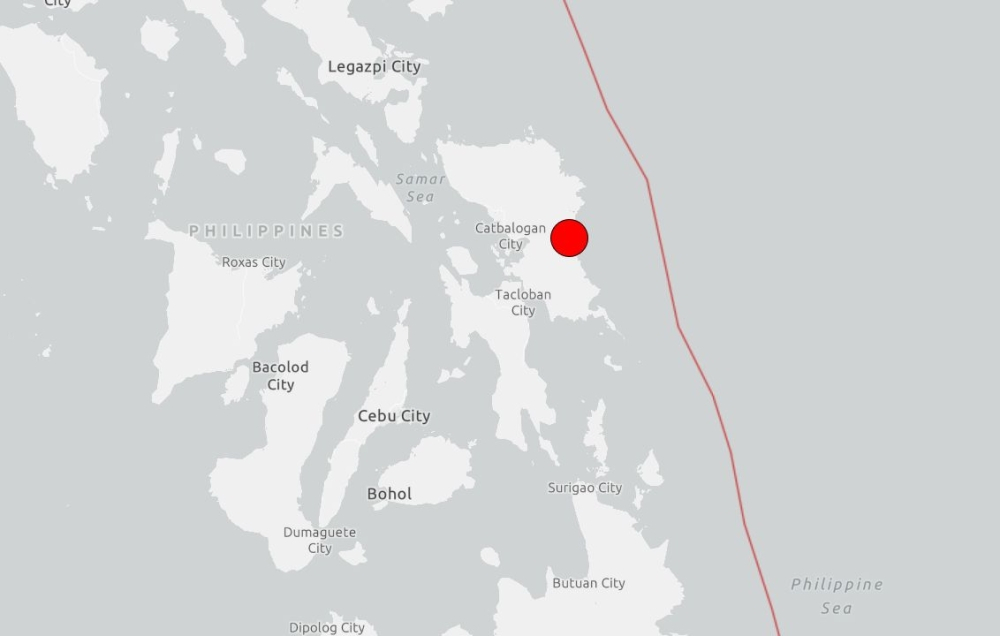
Magnitude 6.0 earthquake shakes Samar island in central Philippines
A magnitude 6.0 earthquake struck Samar Island in the central Philippines on Monday afternoon at around 2:09 pm local time (0609 GMT), according to the United States Geological Survey (USGS).
The tremor occurred at a depth of approximately 73.3 kilometres, with its epicentre located about nine kilometres from the coastal town of San Julian in Eastern Samar province.
Initial reports indicate that the quake was strongly felt in nearby areas. A local police officer described the experience as “sudden and intense,” noting visible damage inside their station. “One of the beams supporting the roof was damaged, and I could see furniture shifting,” he said. As a precaution, officers evacuated the building due to concerns over possible aftershocks.
Despite the strength of the quake, there were no immediate reports of injuries or major casualties.
The Philippines frequently experiences seismic activity as it lies along the Pacific “Ring of Fire,” a region known for its high level of tectonic movement and volcanic activity. Earthquakes of varying magnitudes occur almost daily in the country.
This latest tremor follows a series of significant earthquakes in recent months. In October, Eastern Mindanao experienced two strong quakes measuring magnitudes 7.4 and 6.7, which resulted in at least eight fatalities. Earlier, a magnitude 6.9 earthquake caused widespread devastation in Cebu province, claiming 76 lives and damaging or destroying around 72,000 homes, based on official reports.
While this recent earthquake did not result in immediate casualties, it serves as a reminder of the region’s vulnerability to natural disasters and the importance of preparedness.
At a human level, events like this go beyond numbers and statistics. For the people in Samar, it was a moment of fear, uncertainty, and instinctive survival — stepping outside, checking on loved ones, and waiting for the ground to settle again. These experiences highlight the resilience of communities living in earthquake-prone regions, where strength is not just measured in infrastructure, but in how people respond, recover, and continue forward.