


China Introduces AI Powered System to Transform Aerial Refuelling Efficiency Following US Tanker Crash
In a move that highlights the growing intersection of artificial intelligence and modern warfare, China’s military has revealed a new AI powered system designed to optimise aerial refuelling operations. The development comes just days after a tragic US military aerial tanker crash in the Middle East, drawing global attention to the safety and efficiency of mid air refuelling missions.
According to reports highlighted by the South China Morning Post, the People’s Liberation Army Air Force (PLAAF) has developed what it calls an “aerial refuelling area management system.” The technology is built to intelligently coordinate refuelling missions between tanker aircraft and fighter jets by analysing real time operational data.
The system was reportedly developed by technicians from the PLA Air Force and first underwent trial exercises during training operations late last year. Officials say the technology is already demonstrating strong potential to streamline complex aerial operations and reduce inefficiencies that have historically challenged air forces around the world.
How the AI Refuelling System Works
Aerial refuelling is one of the most demanding and delicate procedures in military aviation. It requires precise coordination between aircraft flying at high speeds, often in crowded or strategically sensitive airspace. China’s new AI driven platform aims to remove many of the traditional operational bottlenecks.
The system continuously monitors real time airspace conditions, including aircraft positions, fuel levels, and operational capacity. Using advanced algorithms, it processes this information and generates optimized pairing recommendations between tanker aircraft and fighter jets.
These recommendations are then delivered to pilots as guidance, helping them determine the most efficient refuelling opportunities. The goal is to ensure every aircraft receives fuel at the right moment without overloading specific tankers or leaving others unused.
PLA Air Force officer Yu He, who participated in the development of the system, explained that the platform’s “smart task assignment” capability provides scientifically calculated and highly efficient solutions. According to him, the system allows the military to maximize aerial refuelling effectiveness while maintaining operational safety.
Fixing a Long Standing Operational Challenge
Before the introduction of this AI system, aerial refuelling operations followed a far more traditional method.
Typically, tanker aircraft would hover within a designated refuelling zone, waiting for fighter jets to approach. Pilots would often choose whichever tanker was closest to them, which frequently created logistical issues.
In many cases, some tankers became overwhelmed with multiple aircraft waiting to refuel, while others remained largely unused in the same airspace. This uneven distribution could cause operational delays, increased fuel consumption, and unnecessary risks in crowded skies.
Chinese military planners have reportedly described this inefficiency as a “critical weakness limiting combat effectiveness.” By applying AI driven coordination, the new system aims to create a more balanced and predictable operational structure.
Timing of the Announcement Raises Global Attention
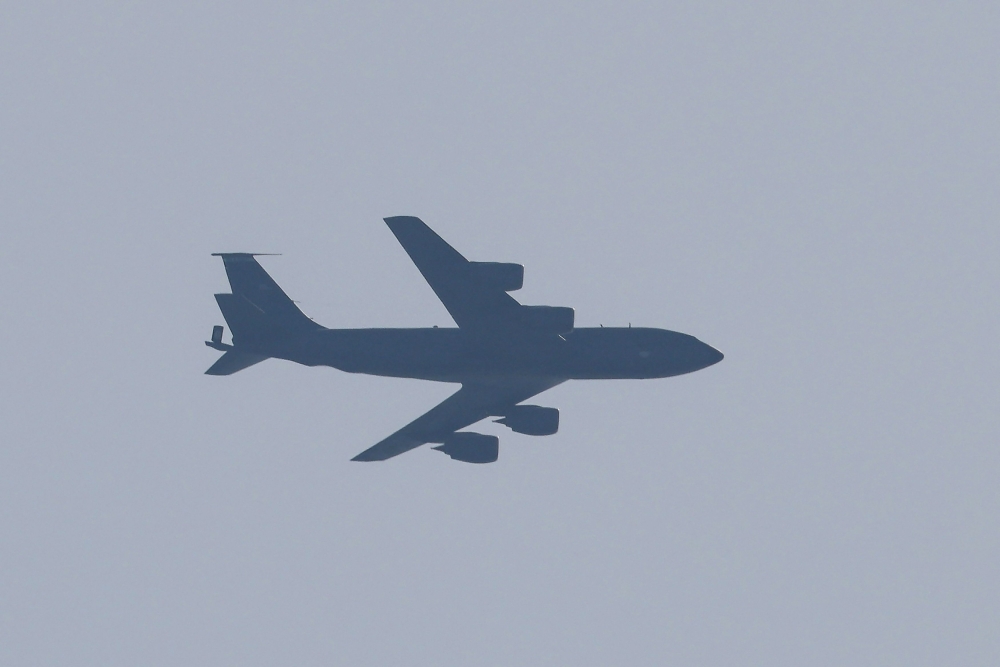
The announcement of China’s AI system gained additional attention because it surfaced shortly after a US Air Force Boeing KC 135 Stratotanker crash in western Iraq.
The aircraft was reportedly involved in operations connected to Operation Epic Fury, a US military campaign targeting Iranian linked forces in the region. Tragically, all six crew members aboard the tanker lost their lives in the incident.
According to the Pentagon, the crash did not appear to involve enemy fire or friendly fire. However, reports indicated that the accident may have occurred after a possible mid air collision with another KC 135 tanker, which managed to land safely despite damage.
While investigations are still ongoing, the incident has once again highlighted the inherent risks involved in aerial refuelling missions, particularly when aircraft are operating under intense operational pressure.
Concerns About Aging Military Aircraft
Chinese state broadcaster CCTV also quoted military analyst Du Wenlong, a retired senior PLA colonel, who raised concerns about the condition of aging refuelling aircraft.
He pointed out that many KC 135 Stratotankers in the US fleet were originally built in the 1950s and 1960s, meaning they have been in service for decades. Continuous long distance deployments to high tension regions can place immense strain on these aircraft, potentially increasing the risk of mechanical failures.
Du also referenced a historical incident from 1966, when a KC 135 tanker collided with a B 52 bomber during a refuelling operation. The accident forced the bomber to drop hydrogen bombs, resulting in radioactive contamination. The event remains one of the most alarming aerial refuelling accidents in aviation history.
The Growing Role of Artificial Intelligence in Military Aviation
China’s new refuelling management system reflects a broader global trend: the rapid integration of artificial intelligence into defense operations.
AI is increasingly being used to manage complex battlefield environments, analyze large volumes of operational data, and support faster decision making. In aviation specifically, AI tools can help reduce pilot workload, improve safety margins, and enhance mission efficiency.
For modern air forces that rely heavily on long range missions, aerial refuelling remains a strategic lifeline. Any technological advancement that improves its safety and coordination can significantly influence military readiness.
A Human Perspective on the Technology
Behind every military innovation are the human lives it is designed to protect. Aerial refuelling operations are carried out by highly trained crews who operate under intense pressure thousands of feet above the ground.
While AI systems can provide faster calculations and better coordination, the ultimate goal remains deeply human: reducing risk, preventing accidents, and ensuring that every pilot and crew member returns home safely.
As technology continues to reshape modern aviation, the balance between human skill and intelligent systems will become increasingly important. Innovations like this AI powered platform may not only transform military operations but also set new standards for safety and efficiency in the skies.