


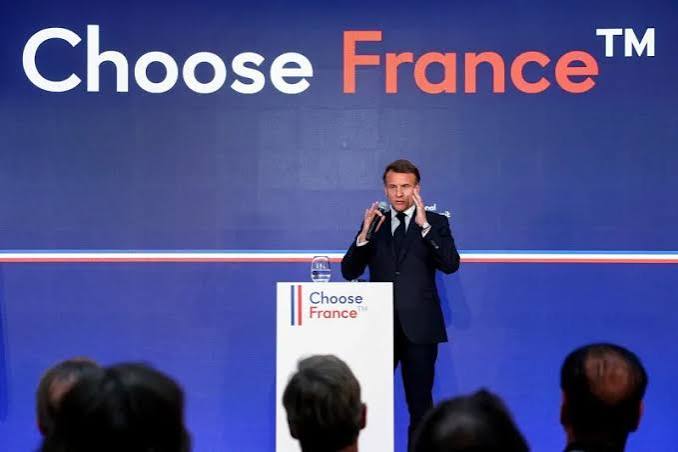
Macron Considers Constitutional Spending Rule as France Faces Growing Debt Concerns
French President Emmanuel Macron is considering introducing a constitutional spending rule, often described as a “golden rule”, to bring the country’s public finances under control as concerns over France’s rising national debt continue to grow.
According to an interview published by French newspaper Le Figaro, Macron said the proposal could be explored as early as January if financial market volatility continues. The measure would require an amendment to the French Constitution and could involve consultations with both houses of parliament.
The proposal comes at a challenging time for France’s economy. The country’s budget deficit, which represents the difference between government revenue and expenditure, is expected to reach 5.4 per cent of gross domestic product (GDP) this year. This is significantly above the European Union’s recommended limit of 3 per cent.
France’s public debt is also attracting growing attention from international investors. Currently estimated at around 120 per cent of GDP, the country’s debt level is among the highest in the eurozone and far exceeds the EU’s reference limit of 60 per cent.
Macron suggested that revisiting a similar initiative introduced in 2011 could be worth considering if financial uncertainty persists. The earlier proposal aimed to establish long-term financial targets that would gradually bring government budgets closer to balance.
Although the initiative received approval from both the French Senate and National Assembly, it was never formally incorporated into the Constitution. Former President Nicolas Sarkozy, who was in office at the time, did not convene a joint parliamentary session to complete the constitutional approval process. Such a change requires the support of three-fifths of parliament.
Meanwhile, Macron’s government is facing difficulties in securing approval for next year’s national budget. The debate has become increasingly tense, with protests and public demands for greater investment in education and essential public services putting additional pressure on policymakers.
Rising borrowing costs are another concern for the French administration. Interest rates on French government borrowing have increased in recent weeks as investors question whether the country can successfully manage its growing debt. According to Le Figaro, Macron is closely monitoring these developments as he considers his next steps.
A constitutional spending rule could attract support from centrist, conservative and far-right political groups, potentially allowing Macron to secure a significant financial reform before leaving office. However, political agreement is far from guaranteed.
Marine Le Pen, the far-right presidential candidate who is leading in opinion polls ahead of next year’s election, has indicated that she may favour a slightly different version of the proposal. This could complicate negotiations and delay its implementation.
A defining moment for France’s financial future
France’s growing debt challenge is about more than government figures and economic forecasts. It raises important questions about how a country can protect public services, maintain economic stability and manage its financial responsibilities without placing an excessive burden on future generations.
For ordinary people, decisions about government spending can influence everything from education and healthcare to employment opportunities, taxation and the overall cost of living. Finding the right balance between financial discipline and public investment will therefore remain one of France’s most important challenges.
As Macron approaches the final stage of his presidency, the proposed spending rule could become a significant part of his political legacy. Whether it succeeds will depend not only on constitutional approval but also on the willingness of political parties to agree on a sustainable economic direction for the country.