


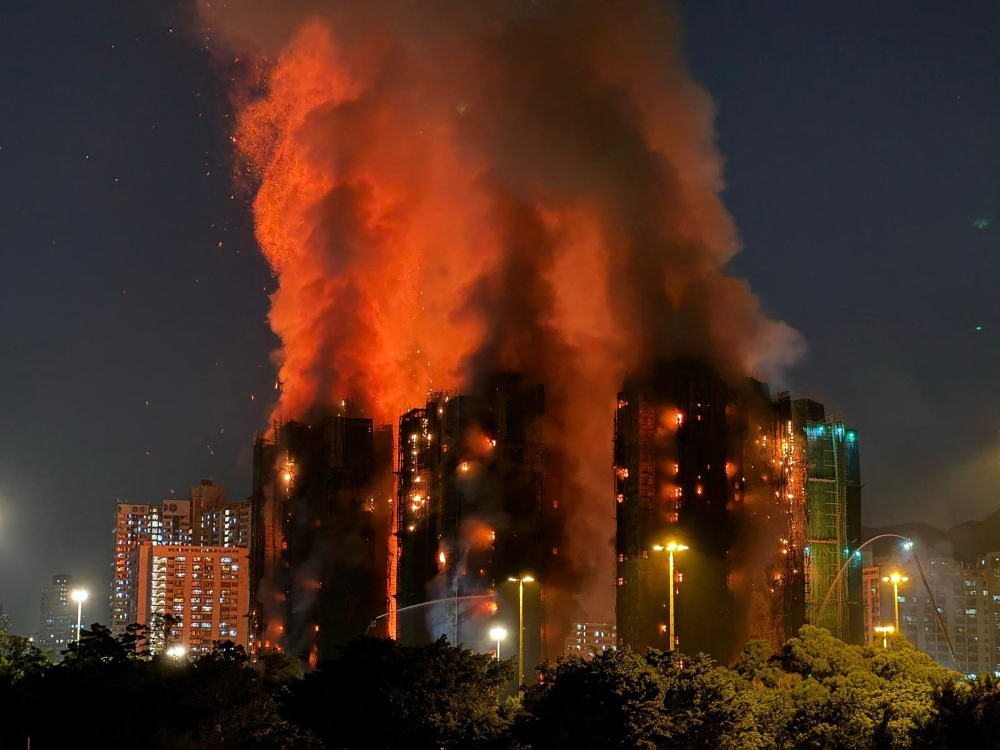
Hong Kong leader apologises for deadly blaze that killed 168 as housing minister resigns
Hong Kong leader John Lee has apologised to residents and the public following a devastating residential fire that claimed 168 lives, while the city’s housing minister has resigned after an official inquiry found that government failures contributed to the tragedy.
The deadly fire broke out on November 26 at Wang Fuk Court, engulfing several residential tower blocks in one of Hong Kong’s most devastating residential disasters. The blaze was the deadliest residential building fire worldwide since 1980, raising serious questions about fire safety, building maintenance and the effectiveness of government oversight.
Following months of public anger and growing demands for accountability, Lee issued an apology at a news conference announcing the findings of an extensive investigation into the disaster. Critics had called on the city’s leader and senior officials to accept responsibility for the failures that allowed the tragedy to unfold.
“I am deeply saddened. I would like to apologise to the affected residents and the general public,” Lee said, bowing as he addressed the public.
The inquiry concluded that four government bodies should bear some responsibility for the high number of casualties. The report placed particular emphasis on the Housing Bureau, stating that it should accept a greater share of responsibility for the circumstances surrounding the disaster.
The findings followed an extensive investigation conducted by a judge-led committee. Since March, the committee has held more than 30 hearings to examine the causes of the fire, the circumstances that contributed to its rapid spread and the failures in fire safety measures.
Evidence presented during the inquiry indicated that almost all fire safety measures failed on the day of the incident, with human error identified as a significant contributing factor. Investigators said the fire was most likely started by a glowing source, possibly a cigarette, which ignited paper materials on the building’s flat roof.
The inquiry also highlighted concerns about preventable risks and missed opportunities to avert the disaster. During a hearing in July, the committee’s leading counsel, Victor Dawes, described the tragedy as preventable and foreseeable, arguing that the necessary measures had not been taken to stop it from happening.
Wang Fuk Court was home to more than 4,600 residents, including approximately 1,700 people aged 65 and above. Older residents were disproportionately affected by the disaster. Of the 168 people who died, 114 were aged 65 or older, accounting for roughly 70 per cent of the total fatalities.
The scale of the loss has intensified concerns about the safety of residential buildings, particularly housing complexes with large populations of older people and residents who may face difficulties evacuating during emergencies. The tragedy has also renewed scrutiny of the responsibilities of government departments, property managers and other parties involved in maintaining safe living environments.
Authorities have taken legal action against individuals and companies allegedly connected to the disaster. Charges, including manslaughter, have been filed against seven individuals and two companies, while at least 35 people have been arrested in connection with the case.
The investigation and subsequent resignations mark significant developments in the search for accountability. However, the findings also raise broader questions about whether stronger enforcement, more effective inspections and better coordination between government agencies could have prevented the loss of life.
For the families who lost loved ones, the consequences extend far beyond the immediate aftermath of the fire. Many residents have been left to confront grief, uncertainty and the difficult process of rebuilding their lives after losing family members, homes and a sense of security.
The disaster serves as a painful reminder that residential fire safety cannot be treated as a routine administrative responsibility. Building inspections, effective safety systems, clear emergency procedures and timely action on identified risks are essential safeguards, particularly in densely populated residential developments.
As Hong Kong continues to confront the findings of the inquiry, public attention will remain focused on whether the authorities can turn the investigation’s conclusions into meaningful reforms. For the victims and their families, accountability will mean more than apologies and resignations. It will also require concrete action to ensure that similar failures do not lead to another preventable tragedy.