


Brazil’s Lula Secures Re-election as Bolsonaro Rival Rejects Results
Brazilian President Luiz Inácio Lula da Silva has secured a dramatic re-election victory, defeating conservative challenger Flávio Bolsonaro in a closely contested presidential race. However, the result has sparked fresh political tensions, with Bolsonaro refusing to accept the outcome and announcing plans to seek the annulment of the election.
According to official results, Lula received 51.8 percent of the vote, compared with 48.2 percent for Bolsonaro, giving the incumbent a lead of approximately 4.4 million votes. The victory marks another major political comeback for Lula, who has remained a central figure in Brazilian politics for decades.
The election outcome also represents a significant moment for Latin American politics. While several countries across the region, including Argentina, Chile, Colombia and Peru, have experienced shifts towards conservative leadership, Lula’s victory offers a contrasting political direction for Brazil.
Flávio Bolsonaro, a senator and son of former far-right president Jair Bolsonaro, rejected the result shortly after the announcement. He described the decision to extend voting hours on election day as unacceptable and accused the authorities of unfairly influencing the process.
Speaking in Brasília, Bolsonaro said he intended to request the election’s annulment, arguing that the circumstances surrounding the vote made it impossible for him to recognise the results.
The controversy centred partly on a Supreme Court ruling that extended voting by two hours after reports of disruptions to public transportation in several cities. Lula’s campaign had raised concerns that reduced bus services prevented some citizens from reaching polling stations. Bolsonaro also requested extensions in certain regions because of heavy rainfall, although he subsequently criticised the broader decision.
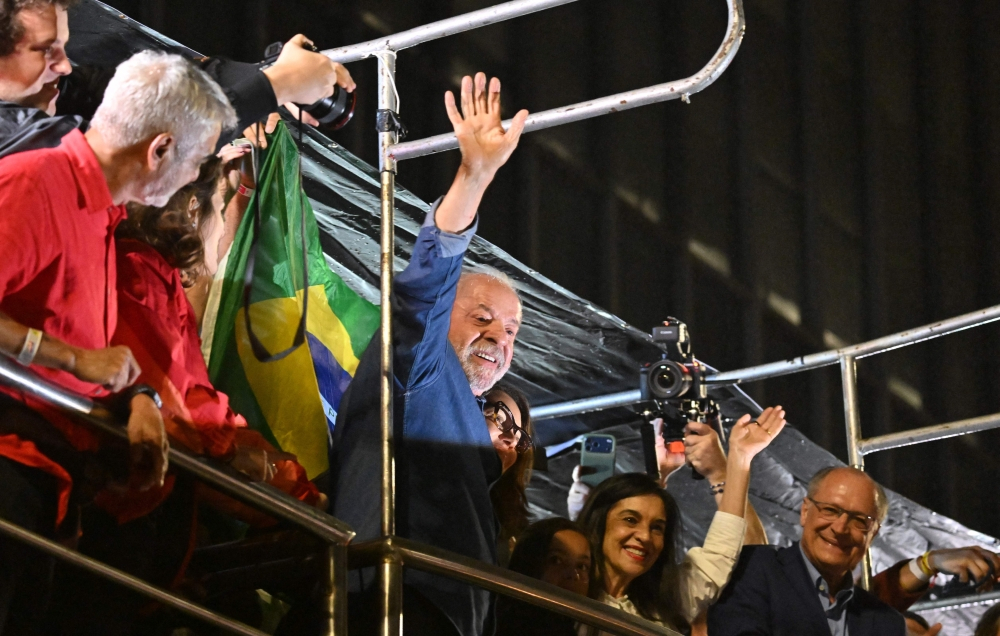
Despite the dispute, Lula’s supporters celebrated the victory in several major cities. In Rio de Janeiro, fireworks and vuvuzelas filled the streets, while thousands of people wearing red, the traditional colour of Lula’s Workers’ Party, gathered in São Paulo to mark the result.
In his first remarks following the victory, Lula highlighted the importance of public participation and democratic institutions. He said the campaign had succeeded in convincing people that voting was essential to protecting democracy in Brazil.
Lula’s comeback and the fight for voters
Lula’s victory followed an intense campaign that gained momentum after his performance in the first round. His supporters organised large rallies, promoted the message “Never Again Bolsonaro” and strengthened their social media outreach to attract undecided voters.
Voter abstention also declined, falling from 21 percent in the first round to 19 percent in the second. The change suggested that more citizens had been motivated to participate as the election approached its conclusion.
For many Lula supporters, the outcome represented more than a presidential victory. It was a demonstration of how public mobilisation, grassroots campaigning and online engagement can influence a closely divided electorate.
Julio Canelo, a 42-year-old lawyer celebrating in Rio de Janeiro, described the result as a victory for democracy. He attributed the outcome to people organising both in the streets and across digital platforms.
Social media played a particularly prominent role throughout the campaign. Meta, the parent company of Facebook, Instagram and WhatsApp, became part of the political debate after Lula’s campaign accused the company of favouring Bolsonaro through alleged algorithmic manipulation.
Meta denied the allegation but acknowledged that technical errors had resulted in some of Lula’s campaign advertisements being mistakenly deactivated.
Following his victory, Lula renewed calls for greater oversight of social media companies, signalling that technology platforms and their influence on political communication could become important issues during his next term.
The bitter campaign also exposed the deep political divisions that have shaped Brazil over the past decade. Allegations, personal attacks and competing narratives about the country’s future made the election a test of public trust as much as a contest between two presidential candidates.
A deeply divided Brazil faces another political chapter
Although Lula has won another term, the result highlights a country that remains sharply divided. Nearly half of voters supported Bolsonaro, reflecting widespread demand for political change and continuing dissatisfaction among a substantial section of the population.
Lula’s political journey has been extraordinary. Born into poverty, he rose to national prominence through the labour movement before becoming president in 2003. He won re-election in 2006 and returned to office following his victory in the 2022 presidential election.
His political comeback followed a corruption case that led to his imprisonment for more than 18 months. The convictions were subsequently annulled on procedural grounds.
During his most recent term, Lula’s administration oversaw declines in inflation and unemployment and pursued policies aimed at reducing hunger and poverty. However, economic pressures continued to weigh on households, with the rising cost of living and concerns about crime remaining important issues for voters.
These challenges helped Bolsonaro attract support beyond his father’s traditional political base. At 45, the senator presented himself as a more moderate and approachable alternative, appealing to conservative voters and those seeking a change in leadership.
For some Brazilians, economic hardship remains the defining issue. Tereza Cristina Ramos, a 68-year-old retiree who voted in Rio de Janeiro, described the financial difficulties facing ordinary households, saying that even buying meat had become unaffordable for many people.
Her concerns reflect the difficult balance Lula will face as he prepares to lead a country where economic expectations, public safety and political disagreements remain major challenges.
Challenges ahead for Lula’s new administration
Lula’s next term will bring significant responsibilities. By the end of his new mandate in 2030, he will be 85 years old, making the demands of leadership and the question of political succession important subjects for Brazil’s future.
He will also have to work with a Congress dominated by right-wing lawmakers, potentially complicating efforts to advance his legislative agenda.
Economic recovery, employment, food affordability, public security and social welfare are likely to remain central concerns for the government. At the same time, Lula will need to address the expectations of voters who supported him while responding to the concerns of those who backed his opponent.
International relations will also play a major role. During the campaign, Lula emphasised Brazil’s national sovereignty amid commercial and diplomatic pressure from the United States under President Donald Trump.
He insisted that Brazil would not accept being treated as another country’s backyard, reinforcing his message that the nation should maintain its independence in international affairs.
The election result also attracted attention from leaders across Latin America. Chilean President José Antonio Kast and Ecuadorian President Daniel Noboa, both associated with the region’s conservative political movement, congratulated Lula on his victory.
Mexico’s left-wing president, Claudia Sheinbaum, also welcomed the outcome, posting on X that democracy had prevailed and the Brazilian people had won.
What Lula’s victory means for Brazil
Lula’s re-election marks another significant chapter in Brazil’s political history, but the close result suggests that governing the country will require more than winning at the ballot box.
His administration must now turn campaign promises into practical improvements that people can see in their daily lives. Reducing financial pressure on families, strengthening public services, creating economic opportunities and rebuilding trust across political divisions will be essential to maintaining public support.
Meanwhile, Bolsonaro’s rejection of the result raises further questions about the country’s political climate and the importance of resolving electoral disputes through established legal and democratic institutions.
For Brazil, the coming years will test whether a deeply divided electorate can find common ground on the issues that matter most. Lula has secured another mandate, but the bigger challenge begins now: delivering results for a nation whose citizens hold sharply different views about its future.
The outcome is a reminder that elections do not end political disagreements. They establish who must take responsibility for addressing them. For Lula, the task ahead is to turn a narrow electoral victory into meaningful progress for Brazilians across the political spectrum.
Source: Agence France-Presse (AFP).