


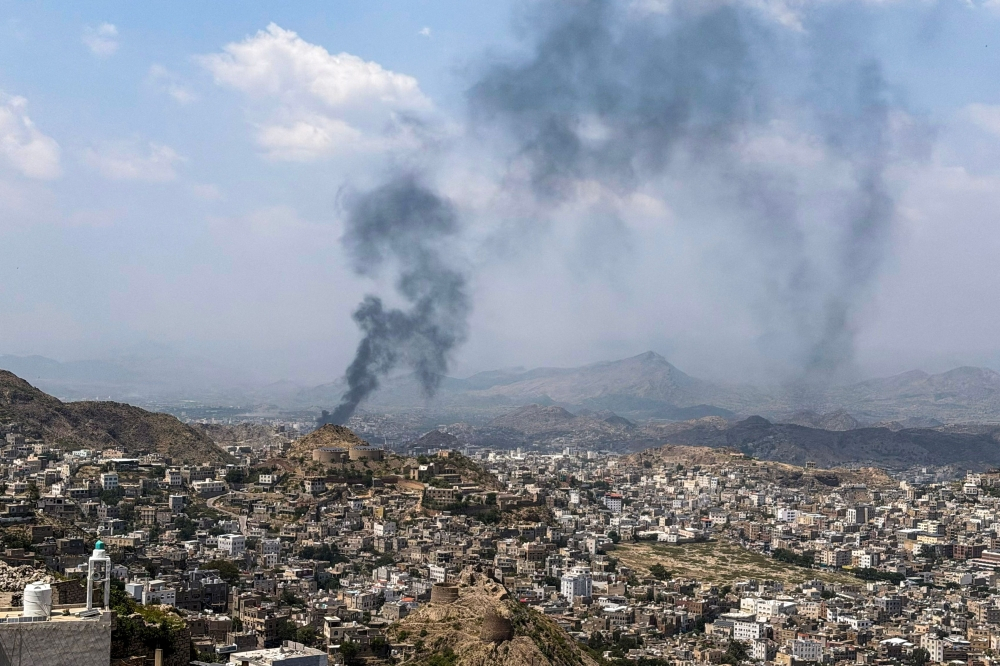
Houthis Target Saudi Airports, Energy Infrastructure and Aden Amid Escalating Regional Conflict
Yemen’s Houthi movement has claimed responsibility for a new wave of attacks targeting Saudi Arabia and Aden, the temporary seat of Yemen’s internationally recognised government. The group said the strikes were launched in retaliation for alleged Saudi attacks in Yemen that it claims killed 17 people. The latest developments have heightened concerns about regional security, critical infrastructure and the growing impact of the wider Middle East conflict.
The attacks come amid a renewed escalation in hostilities involving the Houthis, Saudi Arabia and forces aligned with Yemen’s internationally recognised government. A fragile truce that had helped contain the conflict has reportedly broken down, increasing the risk of further military confrontations and adding pressure to an already volatile regional situation.
Saudi Airports and Energy Facilities Among Reported Targets
According to Houthi military spokesperson Yahya Saree, the group targeted several locations across Saudi Arabia over a 24-hour period, including King Khalid International Airport in Riyadh, airports in Dammam and Najran, and the Khamis Mushait air base.
The Houthis also claimed to have targeted oil-related infrastructure, including crude oil pumping stations and a pipeline transporting oil from eastern Saudi Arabia towards the west. These facilities are strategically important because they support the kingdom’s energy exports and provide an alternative route for transporting crude oil when maritime shipping routes face disruption.
Saudi Arabia’s civil defence authorities reported responding to falling debris in the Mecca and Medina regions after two Houthi missiles were intercepted. The Houthis denied targeting the two cities, which hold exceptional religious significance for Muslims worldwide, and rejected the Saudi account as false.
Meanwhile, King Khalid International Airport announced that domestic and international flights were expected to resume on Sunday following a closure linked to deadly attacks earlier in the month. The announcement offered some reassurance to travellers, although the wider security situation remained uncertain.
Aden Also Comes Under Attack
The reported attacks extended beyond Saudi territory to Aden, a southern Yemeni city that serves as the temporary seat of the internationally recognised government backed by Riyadh.
The Houthis said they targeted a naval base and a military camp overseen by Saudi forces. Local authorities reported that the coast guard headquarters, another government-related building and Aden airport were also among the locations hit.
The developments highlight how Yemen’s internal conflict continues to intersect with wider regional rivalries. Military operations affecting both Saudi Arabia and government-held areas of Yemen could complicate efforts to restore stability and increase the risks faced by civilians, transport operators and essential public services.
Houthis Allege Deadly Saudi Strikes in Yemen
The latest escalation followed allegations broadcast by the Houthi-run Al-Masirah television channel that Saudi strikes had killed at least 17 people in Yemen.
According to the broadcaster, four people were killed when a house in Sanaa was struck, while eight reportedly died in an attack on a residential building housing cement factory workers. A separate strike near the coastal city of Hodeida allegedly killed five members of the same family.
Saudi Arabia had not claimed responsibility for the alleged strikes in the account provided. The casualty figures and circumstances surrounding the reported incidents could not be independently established from the available information.
The competing claims underscore the difficulty of verifying information during an active conflict. Independent confirmation of reported casualties, the locations struck and responsibility for individual attacks remains important as the situation develops.
Strategic Oil Routes Raise Concerns for Global Markets
Saudi Arabia’s oil infrastructure has become a significant concern as the conflict increasingly threatens regional energy security.
Yanbu, a major oil export hub on the Red Sea, plays an important role in allowing Saudi Arabia to move crude oil towards international markets through routes that bypass the Strait of Hormuz. Disruptions to this infrastructure or attacks affecting shipping could create additional uncertainty for global energy supplies.
Saudi Arabia has invested in its east-west pipeline system to provide greater flexibility in transporting oil from production areas in the east to export facilities on the Red Sea coast. Any threat to pumping stations, pipelines, ports or associated infrastructure could therefore have consequences beyond the immediate conflict zone.
Energy markets are particularly sensitive to developments that threaten major production and export routes. However, the scale and duration of any potential market impact would depend on the extent of infrastructure damage, the effectiveness of alternative routes and whether further attacks occur.
Diplomatic and Security Concerns Grow
The latest incidents have prompted renewed attention to the safety of diplomatic personnel and international travellers in the region.
Earlier on Saturday, the Saudi-led coalition said it had intercepted two missiles targeting the western Saudi cities of Taif and Yanbu. Saudi civil defence authorities also issued temporary warnings about potential danger in several western regions before lifting them minutes later.
The United States had previously ordered non-essential embassy staff and their families to leave Saudi Arabia, citing security concerns linked to the Houthi threat. On Saturday, the US Mission to the United Arab Emirates and the US Embassy in Riyadh updated their travel advisories to reflect an increased potential for armed attacks by the Iran-backed group.
Egypt has reportedly suggested sending troops to assist in Saudi Arabia’s defence, while Britain and France have offered support to protect the Gulf kingdom. Such developments indicate that the conflict is drawing wider international attention as governments assess the potential consequences for regional security.
Yemen’s Long-Running Conflict Faces Another Dangerous Turn
Yemen’s civil war has devastated the country for years, leaving millions of people dependent on humanitarian assistance and contributing to one of the world’s most severe humanitarian crises.
Saudi Arabia intervened in the conflict in 2015 at the head of a military coalition supporting Yemen’s internationally recognised government against the Houthis, who control significant areas of the country, including the capital, Sanaa.
A United Nations-backed truce agreed in 2022 helped reduce large-scale fighting, although it did not resolve the underlying political and territorial disputes. Renewed hostilities, combined with the wider confrontation involving regional powers, have raised concerns that Yemen could once again become the scene of sustained and destructive military operations.
The reported expansion of attacks to airports, oil facilities, military installations and government infrastructure increases the potential for further disruption. Civilians remain particularly vulnerable when fighting affects residential areas, transport links and services needed for everyday life.
For Yemen, another prolonged escalation could further undermine an already fragile economy, disrupt the delivery of essential supplies and make diplomatic progress more difficult. For Saudi Arabia and neighbouring countries, the immediate concerns include protecting critical infrastructure, maintaining secure transport routes and preventing the conflict from spreading further.
A Region Facing Greater Uncertainty
The latest Houthi attack claims reflect a broader deterioration in regional security, with the conflict increasingly affecting military installations, airports, energy infrastructure and diplomatic operations.
Although the parties have offered conflicting accounts of recent events, the potential consequences are clear: further escalation could endanger civilians, disrupt regional transport and energy networks, and complicate efforts to reach a political settlement in Yemen.
As governments monitor the situation, independent verification of reported attacks and casualties will be essential. Equally important will be efforts to protect civilians, maintain humanitarian access and prevent further damage to infrastructure on which millions of people depend.
Ultimately, a lasting reduction in violence will require more than military responses. Without renewed diplomatic engagement and meaningful steps towards de-escalation, Yemen and the wider region risk being drawn deeper into a conflict whose human, economic and security costs continue to grow.