


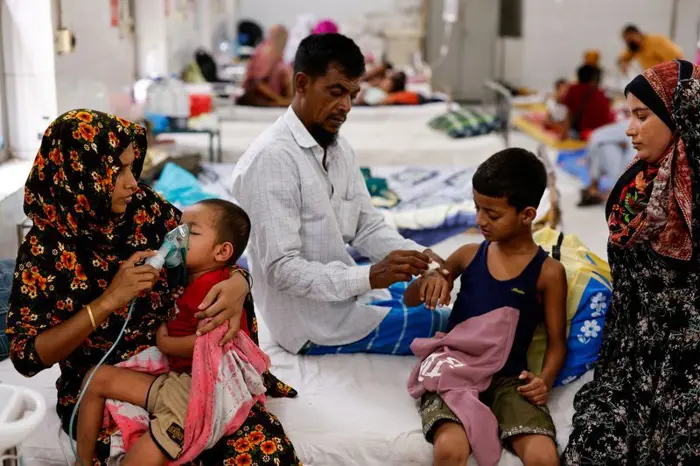
Bangladesh is battling measles. It’s a ‘real warning’ to other nations
Bangladesh is facing a devastating measles outbreak that has exposed serious weaknesses in vaccination coverage, healthcare access and emergency preparedness. With thousands of confirmed infections and more than a thousand reported deaths, the crisis is raising urgent questions about how quickly preventable diseases can spread when routine immunisation systems fail to reach every child.
According to figures from the World Health Organization (WHO), Bangladesh reported approximately 202,000 suspected measles cases, including 22,000 laboratory-confirmed cases, between the outbreak’s emergence in mid-March and October 9. The reported suspected cases exceeded those of any other country during the same period in 2026. The WHO also reported 1,147 deaths, with children under five accounting for 94 per cent of reported fatalities.
Health experts warn that the outbreak offers a sobering lesson for countries worldwide: vaccination programmes must remain consistent, accessible and reliable, even when political instability, financial pressures or public health challenges threaten to disrupt them.
The WHO recommends maintaining measles vaccination coverage of at least 95 per cent with two doses to prevent outbreaks and protect communities. Bangladesh had made significant progress towards this target in previous years, but coverage declined following political upheaval and disruptions to its routine healthcare services.
A review of WHO documents and interviews with scientists, healthcare workers and officials by Reuters highlighted several factors that contributed to the crisis. These included incomplete vaccination records, gaps in emergency planning, shortages of healthcare personnel and difficulties reaching families in remote communities.
Mark Jit, a WHO vaccine adviser and professor at New York University’s School of Global Public Health, described the situation as a serious warning to other countries. He stressed that preventing an outbreak through vaccination is generally safer, less expensive and more effective than attempting to control one after infections have spread.
Although emergency campaigns can eventually bring outbreaks under control, the consequences can be irreversible for families who lose children to a disease that vaccination can prevent.
Families face heartbreaking losses as vaccination efforts fall short
Behind the statistics are families whose lives have been changed forever. In the northeastern Sylhet region, one of the areas hardest hit by the outbreak, two-year-old Arman Hossain died in July after being admitted to hospital. His family reportedly sold its three-wheeled auto-rickshaw to pay for his treatment, but the child, who had not been vaccinated, died within 24 hours of admission.
His four-year-old sister survived. Their father, Amin Mia, said healthcare workers had not visited their remote village to offer vaccinations before the tragedy. He described the painful experience of seeing health workers arrive only after he had buried his son.
Another family in the same region suffered a similar loss. Labiba Akter, a nine-month-old girl, died of measles in June. Her father, carpenter Humayun Rashid, said she might have received an earlier vaccination if the family had been informed about the emergency programme, which had lowered the eligible age for vaccination to six months.
These accounts highlight a troubling reality: healthcare services cannot protect children if families are unaware of available vaccinations or if health workers never reach their communities.
Measles is highly contagious and can cause fever, coughing and a characteristic skin rash. Although many patients recover, complications can be severe, particularly among young children affected by malnutrition or limited access to timely medical care.
The deaths in Sylhet demonstrate how geographical isolation, poverty and inadequate outreach can turn a preventable infection into a family tragedy.
Political instability disrupted Bangladesh’s vaccination progress
Before the current crisis, Bangladesh had achieved considerable success in childhood immunisation. WHO and UNICEF estimates indicated that the country reached 96 per cent coverage for the first measles vaccine dose in 2024, while coverage for the second dose stood at 93 per cent.
However, the political turmoil that followed protests ending former Prime Minister Sheikh Hasina’s 15-year rule disrupted essential health services. Healthcare workers went on strike, vaccine procurement was delayed and follow-up activities associated with routine immunisation programmes were interrupted.
According to a WHO and UNICEF report published in July 2026, estimated coverage fell to 90 per cent for the first dose and 86 per cent for the second dose in 2025. Both figures were below the recommended 95 per cent threshold.
Questions were also raised about the reliability of official vaccination data. Preliminary figures for measles and other diseases sometimes indicated that the number of children vaccinated exceeded 100 per cent of the intended target population, suggesting possible errors in population estimates, dose counts or record-keeping.
Reliable data is essential for effective public health planning. Without accurate information about where children live, which vaccinations they have received and who remains unprotected, authorities risk overlooking vulnerable communities until infections begin to spread.
Emergency vaccination campaign failed to reach every child
When the outbreak intensified, Bangladesh launched an emergency vaccination campaign in April and May. The government reported that nearly 20 million children received vaccinations and initially indicated that all children within the targeted age group of six months to five years had been covered.
The campaign was followed by an initial decline in new cases, raising hopes that the outbreak was coming under control. However, infections increased again in the following months.
A comparison of vaccination targets for another health intervention in June reportedly identified around four million more children in the same age group than the measles campaign had accounted for. This raised concerns about whether the emergency programme had reached all eligible children.
Government adviser Ziauddin Hyder acknowledged that gaps remained, while pointing to possible vaccine hesitancy and childhood illnesses as reasons some parents might not have brought their children for vaccination.
Documents reviewed by Reuters also indicated that the emergency response was launched after only one round of preparedness checks, rather than the four rounds typically undertaken. Such checks help authorities confirm vaccine storage capacity, estimate target populations and determine whether local health services are prepared for a campaign.
The compressed timeline helped the government respond quickly, but it may also have limited its ability to identify operational weaknesses before the programme began.
By August, the proportion of children with confirmed measles infections who had not been vaccinated remained alarmingly high. Meeting records reportedly showed that this proportion increased from 82 per cent before the campaign to 85 per cent afterwards, indicating that major gaps persisted.
Professor Mahmudur Rahman, an epidemiologist and chair of Bangladesh’s National Verification Committee for Measles and Rubella Elimination, warned that inadequate preparation often leaves the poorest and hardest-to-reach children most vulnerable.
Healthcare shortages make the crisis harder to contain
The outbreak has placed additional pressure on a healthcare system already dealing with other public health challenges, including dengue.
In Sylhet, families interviewed by Reuters described limited contact with vaccination teams. Eight of the 16 families interviewed in September said they had not seen health workers offering vaccinations, while at least six reported that healthcare workers visited their communities only after a child had died from measles.
At Shahid Shamsuddin Ahmed Hospital, a 100-bed facility treating measles patients, conditions reportedly became severely overcrowded. During a Reuters visit in September, 178 patients were admitted, far exceeding the hospital’s stated capacity.
Such overcrowding can make it more difficult for healthcare professionals to provide timely and appropriate care, particularly to children who develop serious complications.
The challenges extend beyond hospital capacity. UNICEF and the Bangladesh Bureau of Statistics have reported that as many as 40 per cent of children may be unregistered, making it harder for authorities to identify and reach every eligible child. Government data also indicated that approximately one-third of healthcare worker positions were vacant.
These shortages create a difficult cycle. Inadequate staffing weakens routine immunisation, incomplete records make missed children harder to identify, and rising infections place additional pressure on already stretched medical facilities.
Bangladesh launches another campaign as experts call for wider protection
At the end of September, the government launched another vaccination campaign aimed at reaching 3.4 million children who may have missed earlier efforts.
Health Minister Sardar Md. Sakhawat Husain said the government intended to involve communities across villages to ensure that no child was overlooked.
The renewed effort comes as experts call for a broader assessment of which age groups need protection. According to the WHO, children older than five account for around one-third of reported measles cases, prompting health specialists to urge authorities to consider expanding vaccination efforts where appropriate.
Scientists are also investigating why immunity appears to decline faster than expected in some infants under approximately six months of age, who are generally expected to receive temporary protection from maternal antibodies.
Meanwhile, the WHO has reiterated its commitment to supporting Bangladesh in strengthening vaccination services and reaching every child at risk. Experts say the long-term solution must extend beyond emergency campaigns to include stronger routine immunisation, better population data, improved staffing and sustained communication with parents.
Why the outbreak matters beyond Bangladesh
Bangladesh’s measles crisis carries important lessons for governments and healthcare systems everywhere. Even countries that have achieved strong vaccination rates can become vulnerable when immunisation programmes are disrupted, healthcare access declines or public health authorities lose track of children who need protection.
The challenge is not simply to purchase vaccines or organise a campaign. It is to ensure that every eligible child can receive the required doses, regardless of where they live, their family’s financial circumstances or whether their community is difficult to reach.
The outbreak also demonstrates why accurate data, trained healthcare workers and public trust are essential parts of disease prevention. Vaccination programmes work best when communities receive clear information, families can access services conveniently and health authorities can identify coverage gaps before they become emergencies.
For Bangladesh, the immediate priority is to stop transmission, provide timely treatment and protect children who remain vulnerable. For other nations, the message is equally urgent: maintaining vaccination coverage requires continuous investment, careful planning and a commitment to reaching those who are most likely to be missed.
Behind every reported case is a person, and behind every child lost is a family that must live with the consequences. No parent should have to sell their livelihood to seek treatment for a preventable disease, only to lose their child. The most meaningful measure of a healthcare system is not simply how quickly it responds to a crisis, but whether it reaches people early enough to prevent that crisis from happening in the first place.