


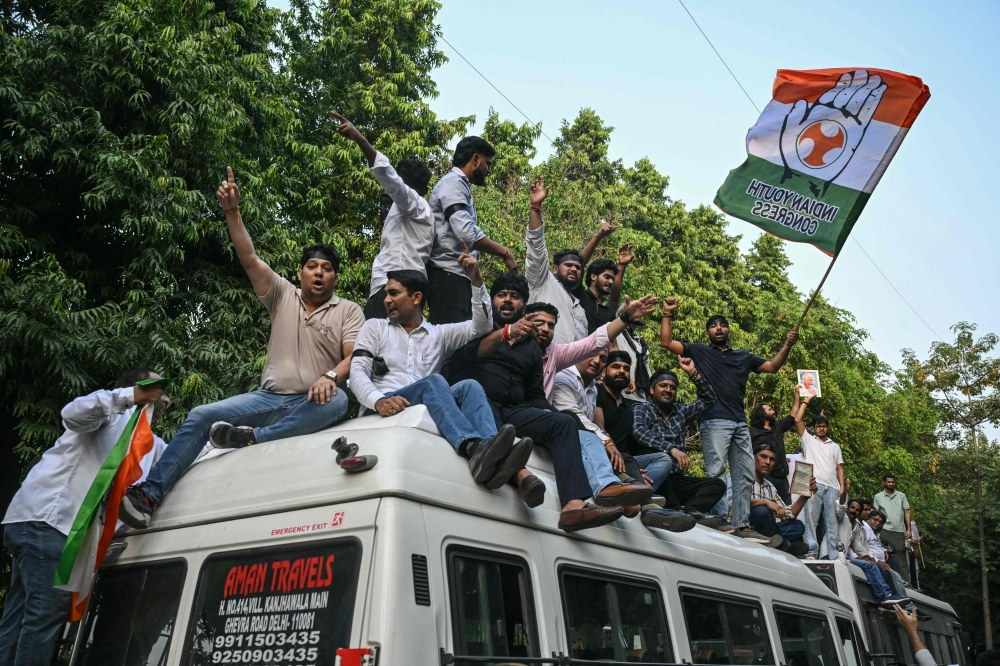
New Delhi locks down ahead of mass protest over India’s voter rolls
Security has tightened across India’s capital as authorities prepare for large-scale protests over alleged irregularities in the country’s electoral rolls. Thousands of police and paramilitary personnel have been deployed ahead of demonstrations scheduled for October 10, with opposition parties and youth activists demanding accountability from the Election Commission of India (ECI).
The controversy centres on the ECI’s Special Intensive Revision of electoral rolls, an exercise the commission says is designed to identify and remove duplicate and ineligible voters. However, opposition parties and critics have raised concerns that the process could exclude eligible citizens from voting, potentially benefiting Prime Minister Narendra Modi’s ruling Bharatiya Janata Party (BJP).
The issue has triggered protests in several locations this month, including New Delhi. Leaders from the opposition Congress party have joined demonstrations, with Rahul Gandhi, the Leader of the Opposition in the Lok Sabha, reportedly briefly detained during rallies earlier this week.
Protesters, including supporters of the youth-led Cockroach Janta Party (CJP) movement, are preparing for further demonstrations in the capital. Their demands include the resignation of Chief Election Commissioner Gyanesh Kumar and greater accountability over the electoral-roll revision process.
Gandhi and other opposition leaders are also expected to meet President Droupadi Murmu to raise their concerns about the Election Commission’s handling of the issue. The ECI, a constitutionally established body responsible for conducting elections in India, has rejected allegations of wrongdoing.
Authorities have introduced extensive security measures ahead of the planned rallies. According to the Press Trust of India news agency, more than 20,000 police and paramilitary personnel have been deployed across the capital.
Yellow metal barricades have been installed along key roads in central New Delhi, restricting access to Jantar Mantar, a designated location for public demonstrations. However, police have reportedly not granted permission for the planned rally at the site.
The security arrangements are also expected to affect public transport. According to media reports, Delhi Metro authorities were instructed to close entry and exit gates at selected stations from the evening of October 9. A police communication cited the possibility of protests and unruly crowd movements as the reason for the measure, with restrictions potentially affecting 57 stations until conditions return to normal on October 10.
Rail services have also reportedly been affected, with several incoming trains scheduled to arrive at two major railway stations in the capital cancelled ahead of the demonstrations. The measures reflect the authorities’ preparations for a potentially significant day of political mobilisation.
Cockroach Janta Party challenges police restrictions
The Cockroach Janta Party, which emerged online in May as a satirical political movement, has attracted attention through its unconventional approach to political activism. The movement previously organised protests at Jantar Mantar and claimed success in a campaign that led to the removal of the then education minister.
The group has now called for mass mobilisation in New Delhi, including a planned march towards Jantar Mantar. Its organisers have alleged that volunteers and supporters were being detained ahead of the demonstration. These claims had not received a public response from police in the report.
CJP activist Saurav Das criticised the police response on social media, accusing the Delhi Police of acting like a political force aligned with the ruling BJP. The allegation reflects the increasingly confrontational rhetoric surrounding the planned protests.
CJP chief Abhijeet Dipke also addressed supporters online, insisting that the reported intimidation would not discourage young people from participating. He said he intended to travel to Delhi and join the march, regardless of the restrictions.
Electoral transparency remains at the centre of the dispute
The developments highlight the growing political tension surrounding electoral-roll revisions in India. At the heart of the dispute is a fundamental question: how can authorities ensure that voter lists remain accurate while protecting every eligible citizen’s right to participate in elections?
Removing duplicate and ineligible entries is an important part of maintaining reliable electoral records. At the same time, any revision process must be transparent, accessible and subject to safeguards that prevent legitimate voters from being wrongly excluded.
For opposition parties and protesters, the issue is not simply an administrative exercise. They argue that public confidence in the electoral process depends on clear explanations, credible safeguards and accountability from the institutions responsible for managing elections. The Election Commission, meanwhile, maintains that its revision exercise is intended to improve the accuracy of electoral rolls.
As New Delhi prepares for the demonstrations, attention will turn to how the authorities manage public safety, whether protesters are permitted to assemble and how political leaders respond to the allegations. The situation could become another significant test of the relationship between civil protest, electoral administration and political accountability in the world’s largest democracy.
Ultimately, public trust in elections depends on more than the preparation of voter lists. It also requires citizens to have confidence that their eligibility is protected, their concerns can be heard and the institutions overseeing the democratic process operate fairly.