


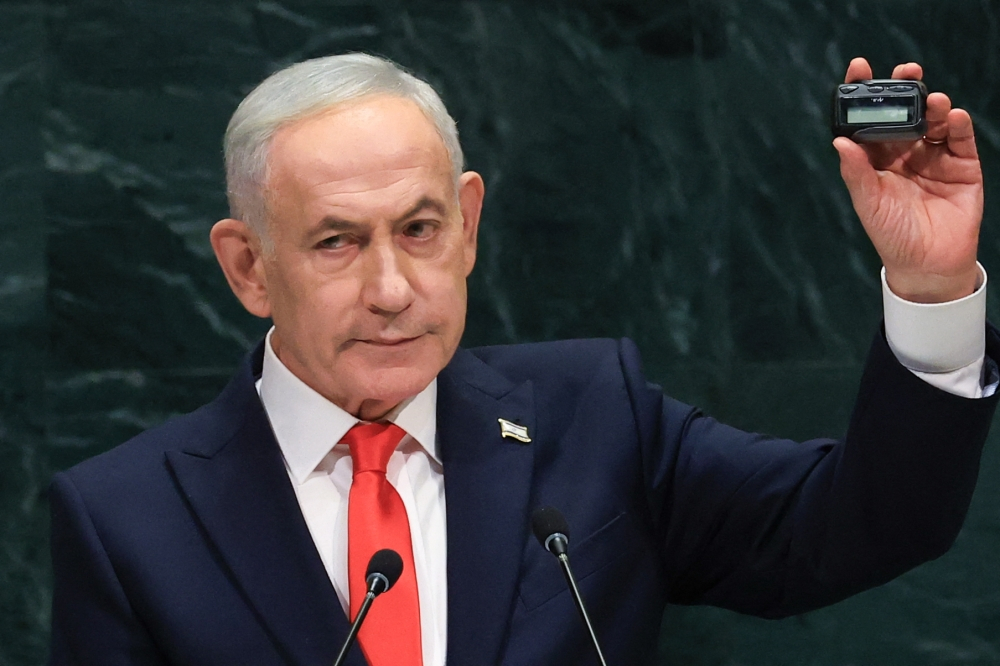
Netanyahu warns of possible pre-election attack as Lapid accuses him of stoking public fear
Israel’s election campaign has taken an increasingly tense turn after Prime Minister Benjamin Netanyahu warned that Israel’s enemies could attempt to launch an attack before the country’s October 27 parliamentary elections.
Netanyahu made the warning on Tuesday during a video filmed at the Tel Nof Air Force Base. He said Israeli authorities had indications that potential adversaries could try to attack the country ahead of the vote and issued a strong warning that Israel would respond.
The statement immediately drew a response from opposition leader Yair Lapid, who requested an urgent security briefing to establish what intelligence was behind the warning and how the government planned to protect the election process. Lapid said security threats should be handled professionally and responsibly and argued that there was no reason to create public panic.
Following the briefing, Netanyahu’s office said Lapid had been given details about warnings concerning possible attacks on several fronts in the period leading up to the election. The Prime Minister’s Office did not publicly provide further operational details about the alleged threats.
Lapid, however, continued to question the way Netanyahu had presented the warning. He said he expected the election to take place as scheduled and argued that military facilities should not become the setting for campaign-style political messaging. His comments reflect a wider opposition concern that national security issues are becoming increasingly intertwined with the election campaign.
The dispute comes at a particularly sensitive moment for Netanyahu. Israel remains involved in military operations and regional tensions involving Gaza and Lebanon, while the prime minister has also issued increasingly firm warnings toward Iran and other regional actors. The security environment has therefore become a central issue in the campaign.
The October 7, 2023 Hamas attack is also deeply connected to the political argument. Lapid again accused Netanyahu of having failed to respond adequately to warnings before that attack. Netanyahu has faced continuing political criticism over the government’s handling of the security failures surrounding October 7, while his supporters and party have rejected accusations that he ignored warnings and have described some of the current allegations as politically motivated.
The controversy has also brought other opposition figures into the discussion. Former military chief Gadi Eisenkot has called for the opposition leadership to receive immediate information if the threat is genuine, while stressing that Israel’s security situation should not be mixed with the election process.
Netanyahu’s warning comes as he faces a competitive election campaign, with security, the Gaza conflict and the government’s record surrounding the October 7 attack all forming part of the political debate. Recent reporting has highlighted how Netanyahu continues to emphasize his security credentials while opponents focus on the failures that preceded the 2023 attack.
The security dispute has also extended beyond Israel’s immediate borders. Defence Minister Israel Katz separately warned that Hamas leaders outside Gaza could remain targets of Israeli action. His remarks followed an Israeli military operation in northern Gaza and renewed attention on Israel’s policy toward Hamas leadership abroad.
For ordinary Israelis, the immediate issue is bigger than political rhetoric. The country is being asked to prepare for an election while facing genuine regional security concerns, and the debate now centers partly on how those threats should be communicated to the public without unnecessarily increasing fear or disrupting the democratic process.
With the October 27 vote approaching, Netanyahu’s security warnings and Lapid’s response are likely to remain part of a broader campaign debate over national security, political responsibility and the lessons of October 7. The available public statements establish that Israeli authorities have discussed possible threats, but the specific intelligence behind those warnings has not been publicly disclosed.