


Malaysian manufacturers turn to Singapore and China as West Asia war disrupts supply chains
Malaysia’s manufacturing sector is continuing to feel the pressure of the ongoing West Asia war, with businesses facing higher costs, supply shortages and growing uncertainty over how long the disruption will last.
New survey findings presented by the Federation of Malaysian Manufacturers (FMM) show just how widespread the impact has become. A striking 96 per cent of manufacturers surveyed said the conflict has affected their businesses in some way, highlighting how geopolitical instability is increasingly reaching factories, supply chains and production floors in Malaysia.
For many manufacturers, the biggest challenge is not simply the conflict itself, but what it is doing to the movement and cost of essential materials.
Raw material shortages become a major concern
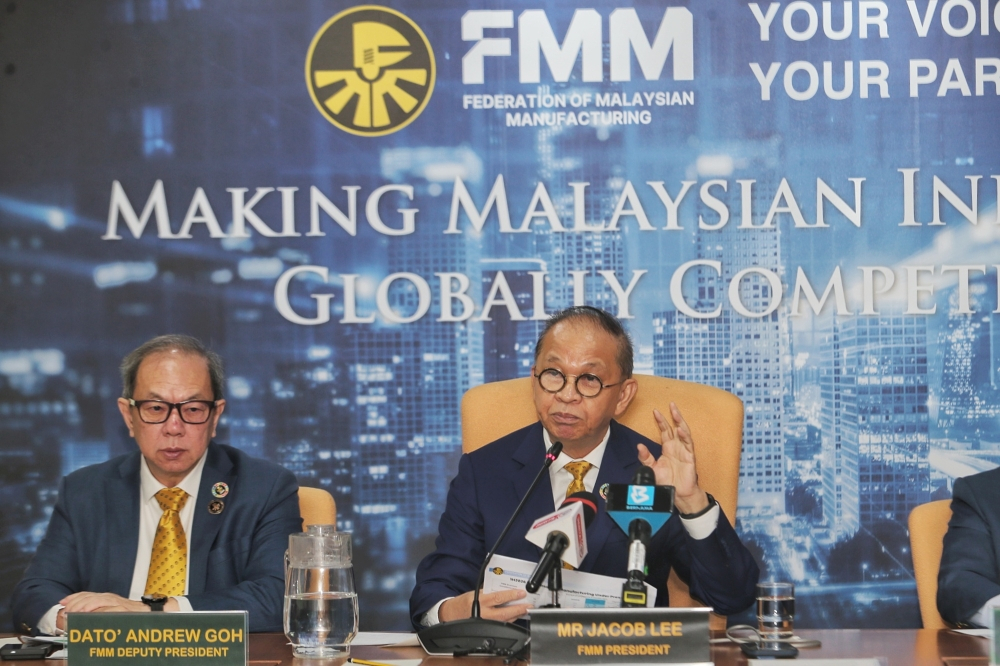
According to FMM president Jacob Lee, raw material shortages and rising input prices are among the most serious problems facing manufacturers, affecting 74 per cent of respondents.
The impact has been particularly significant in industries that depend heavily on reliable supplies of specialised materials, including automotive, plastics and pharmaceutical manufacturing.
When materials arrive late, become more expensive or are suddenly difficult to source, manufacturers have little choice but to adjust production schedules, increase inventories or search for new suppliers.
And that is exactly what many Malaysian companies are now doing.
Singapore and China emerge as alternative sourcing destinations
Disruptions around the Strait of Hormuz have encouraged manufacturers to rethink where they obtain their raw materials.
Lee said a significant number of companies are now looking towards suppliers in Singapore and China in an effort to build more dependable supply chains and reduce their exposure to further disruptions.
But finding an alternative supplier does not necessarily mean finding a cheaper one.
Higher transportation and logistics expenses are adding another layer of pressure, pushing up the overall cost of production for manufacturers.
For companies already operating on tight margins, that can quickly become a serious business challenge.
Logistics costs are putting further pressure on businesses
The survey shows that the problems extend well beyond raw materials.
Around 72 per cent of manufacturers reported higher freight, logistics and shipping costs, while 44 per cent are dealing with increased energy and fuel expenses.
For some businesses, the financial strain is also reaching their working capital and cash flow. About 20 per cent reported pressure in these areas, while 19 per cent experienced weaker export orders or had to renegotiate existing contracts.
The disruption is therefore becoming a broader operational issue rather than a temporary supply-chain inconvenience.
Manufacturers may still be producing goods, but doing so is becoming more complicated and more expensive.
Alternative transport routes come at a price
Manufacturers that depend on energy and raw materials transported through the Strait of Hormuz are particularly vulnerable.
Lee explained that some companies and traders have had to explore alternative transportation routes to keep supplies moving.
In certain cases, goods are being transported over land before being brought into Malaysia by sea.
That may keep the supply chain moving, but it comes with a much higher price tag.
For manufacturers, the message is becoming increasingly clear: keeping production running may require paying more for every stage of the journey.
Companies are changing the way they manage risk
Rather than waiting for conditions to return to normal, many manufacturers are already taking steps to protect themselves against further disruptions.
The FMM survey found that 29 per cent of respondents have increased their stockpiles of critical raw materials.
Another 25 per cent are changing suppliers or diversifying the countries from which they source materials, while 21 per cent have significantly restructured their logistics arrangements.
These changes suggest that manufacturers are moving away from relying too heavily on a single supplier, route or market.
In an increasingly unpredictable global environment, supply-chain resilience is becoming just as important as cost efficiency.
Disruption may be easing, but uncertainty remains
There are some signs that the intensity of the disruption has eased for part of the manufacturing sector.
Around 40 per cent of manufacturers said the impact has partially reduced.
However, the overall situation remains far from normal.
Some 32 per cent said the disruption is still at the same elevated level as six months ago, while 11 per cent reported that conditions have actually worsened.
Another 31 per cent said it is still too early to determine the long-term consequences of the situation.
That uncertainty makes business planning particularly difficult. Manufacturers have to make decisions today about inventory, suppliers, logistics and investment without knowing exactly what the global environment will look like months from now.
Manufacturers call for targeted government support
With costs continuing to rise, the manufacturing industry is calling for practical government measures to help businesses absorb the additional burden.
The FMM survey shows that 56 per cent of manufacturers support duty and tax exemptions on raw materials sourced from alternative countries.
Meanwhile, 40 per cent are seeking industrial fuel rebates for companies that are not covered by existing diesel subsidy schemes.
Another 32 per cent are calling for tariff reductions or faster progress on trade agreements to help reduce some of the additional costs created by geopolitical instability.
The industry’s position is clear: manufacturers are not simply asking for broad financial assistance. They want targeted measures that can directly reduce the cost of keeping factories operating and supply chains moving.
What this means for Malaysia’s manufacturers
The latest developments offer a bigger lesson for Malaysian businesses.
The traditional approach of finding the lowest-cost supplier may no longer be enough. Companies are increasingly having to balance price against reliability, geographical risk, transportation routes and the ability to secure materials during a crisis.
The shift towards Singapore and China is one example of how businesses are adapting to this new reality.
But diversification also comes with its own costs.
Building larger inventories requires more working capital. Finding new suppliers takes time. Alternative shipping routes can be more expensive. And changing established supply chains can create new operational challenges.
Still, for many manufacturers, doing nothing may be an even bigger risk.
The West Asia war is showing Malaysian businesses that global events can quickly become local business problems. A disruption thousands of kilometres away can eventually affect the price of materials, the cost of transportation, factory operations and even the final price paid by customers.
For manufacturers, resilience is no longer just a long-term strategy. It is becoming part of everyday business survival.
And behind every statistic is a company trying to keep its workers employed, its orders moving and its customers supplied. That human side of the story matters. Malaysian manufacturers are not simply responding to numbers on a survey; they are making difficult decisions every day to keep their businesses running in an uncertain world.