


The last frontier Trump moves to create a US Space Academy as space ambitions grow
The United States is taking another major step toward strengthening its presence in space, with President Donald Trump signing an executive order to begin the process of establishing the country’s first US Space Academy.
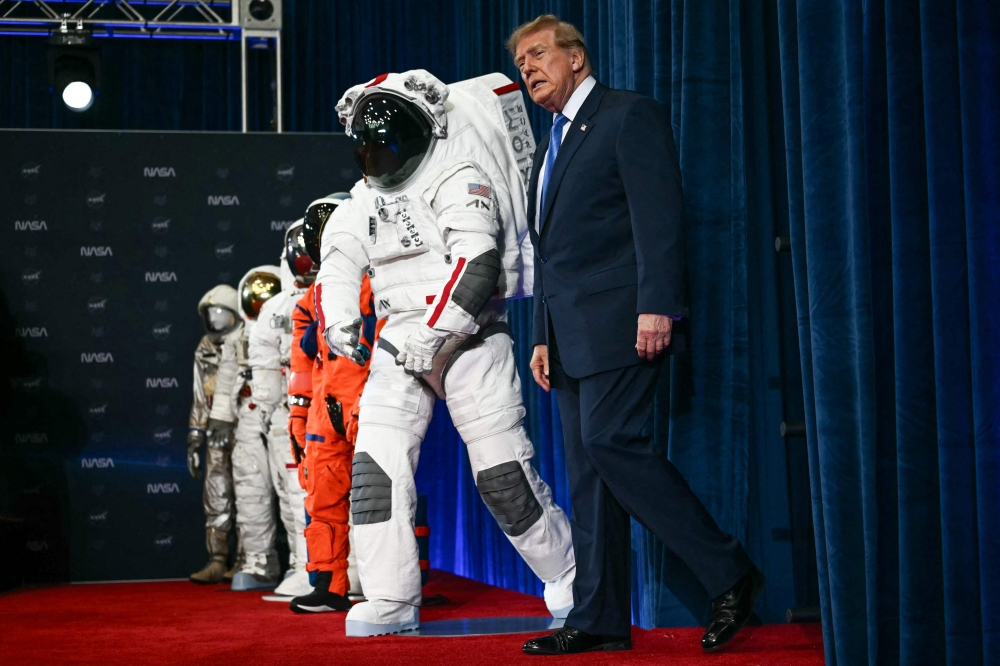
Trump signed the order on Friday at NASA’s Johnson Space Center in Houston, highlighting what he described as the rapidly expanding role of the US Space Force and the commercial space industry.
The move comes as America looks beyond Earth’s orbit and sets its sights on bigger ambitions, including returning to the Moon and eventually pushing farther into deep space.
“Given the rapid growth of the US Space Force and commercial space industry, and the expansion of our ambitions to the Moon and far beyond the Moon, it’s clear we will need to educate and train an entire generation of skilled service members, engineers, and civil operators,” Trump said.
The proposed academy is expected to focus on preparing the next generation of professionals who will support America’s growing space ambitions. That could include military personnel, engineers, technical specialists and civilian space operators.
As part of the executive order, NASA Administrator Jared Isaacman has been asked to chair a new Presidential Commission on the US Space Academy.
The commission will have 120 days from the signing of the order to submit its recommendations to Trump. Among the issues it is expected to examine are the academy’s governance structure, service obligations for graduates, possible locations, legislative requirements and other key elements needed to establish the institution.
The proposal reflects how quickly the space sector is changing. Space is no longer driven only by government agencies. Private companies, commercial launch providers, satellite businesses and other emerging technologies are playing an increasingly important role in the industry.
That growing ecosystem also means the demand for people with advanced technical and operational skills is likely to increase.
For the United States, creating a dedicated Space Academy could therefore become more than an educational initiative. It could be part of a broader strategy to prepare people for a future in which space exploration, national security, science, engineering and commercial activity become increasingly interconnected.
The idea also raises a bigger question: as humanity prepares to spend more time beyond Earth, who will train the people capable of taking us there?
America’s proposed Space Academy may be an early answer.
The next 120 days will be important as the presidential commission develops its recommendations and begins shaping what could become a new institution for the country’s next generation of space professionals.
Source: Bernama-Xinhua