


Houthis Target Saudi Oil Tankers as US-Iran Conflict Expands Across the Middle East
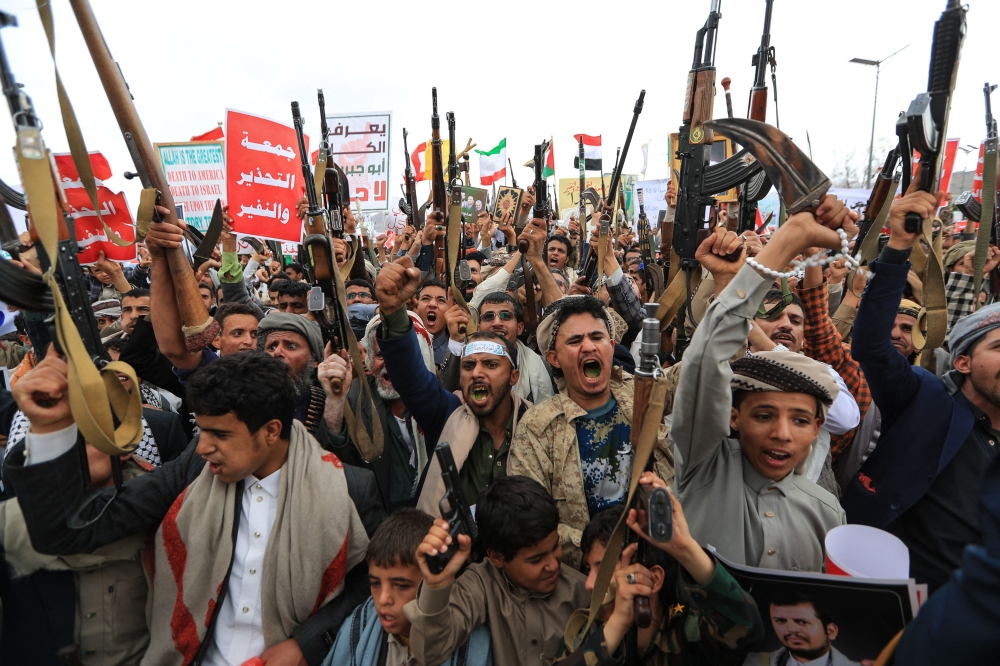
The conflict between the United States and Iran has entered another dangerous phase after Yemen’s Houthi rebels claimed responsibility for attacking two Saudi oil tankers in the Red Sea, raising fears that the war could spread across even more parts of the Middle East.
According to the Houthis, missile and drone strikes targeted the Saudi oil tankers Encelia and Layla, accusing the vessels of violating their declared maritime blockade. While the claims are still being assessed, maritime security authorities confirmed that a commercial tanker was struck by an unidentified projectile southwest of Al Shuqaiq, triggering a fire that crew members worked quickly to contain.
The latest incident comes as the United States carried out another wave of military strikes against Iranian military targets, marking the twelfth consecutive night of operations. Washington says the attacks are intended to weaken Iran’s ability to threaten commercial shipping and civilian vessels operating in strategic waterways.
The Red Sea has become increasingly important as tensions spread beyond the Strait of Hormuz. The Houthis have now threatened to block Saudi ports, a move that could significantly disrupt one of the world’s most critical energy transportation routes and further strain global supply chains.
US President Donald Trump responded with a strong warning, stating that any future Iranian attack on commercial shipping in the Strait of Hormuz would be met with strikes on Iranian infrastructure, including bridges or power plants.
Iranian Foreign Minister Abbas Araghchi responded by warning that Tehran would retaliate against any attacks on its infrastructure, repeating that Iran’s military doctrine remains based on reciprocal action.
As diplomatic efforts continue to deteriorate, both sides have exchanged increasingly aggressive statements, reducing hopes for an immediate political solution and increasing concerns over a prolonged regional conflict.
Military activity has also spread beyond Iran and Saudi Arabia. Kuwait reported intercepting hostile drones with its air defense systems, while Jordan announced it had destroyed several incoming missiles and drones. Air raid alerts were also activated in Bahrain as explosions were reported in the region. Iranian military officials later stated that American assets in multiple countries had been targeted.
Meanwhile, commercial shipping companies remain on high alert. International maritime organizations have reported that vessels operating near Yemeni waters have received radio warnings advising them to avoid violating Houthi restrictions or risk becoming military targets.
Some ships have already changed course to avoid the growing security risks, although many commercial vessels continue to navigate through the Bab al-Mandab Strait, one of the world’s busiest maritime trade corridors.
The rising military tensions are already affecting global markets. Brent crude oil briefly climbed above US$95 per barrel before easing slightly, reflecting growing investor concerns over possible disruptions to global energy supplies.
The Houthis have previously targeted commercial shipping during the Gaza conflict, forcing many vessels to reroute around Africa and significantly increasing shipping costs and delivery times. The latest developments suggest those risks are once again becoming a major concern for international trade.
As military operations continue and diplomatic relations remain strained, the international community is closely monitoring the situation. Any further escalation could have far-reaching consequences not only for the Middle East but also for global energy markets, international shipping, and economic stability.
With multiple nations now directly or indirectly involved, the coming days will likely determine whether the conflict remains regionally contained or expands into an even broader international crisis.