


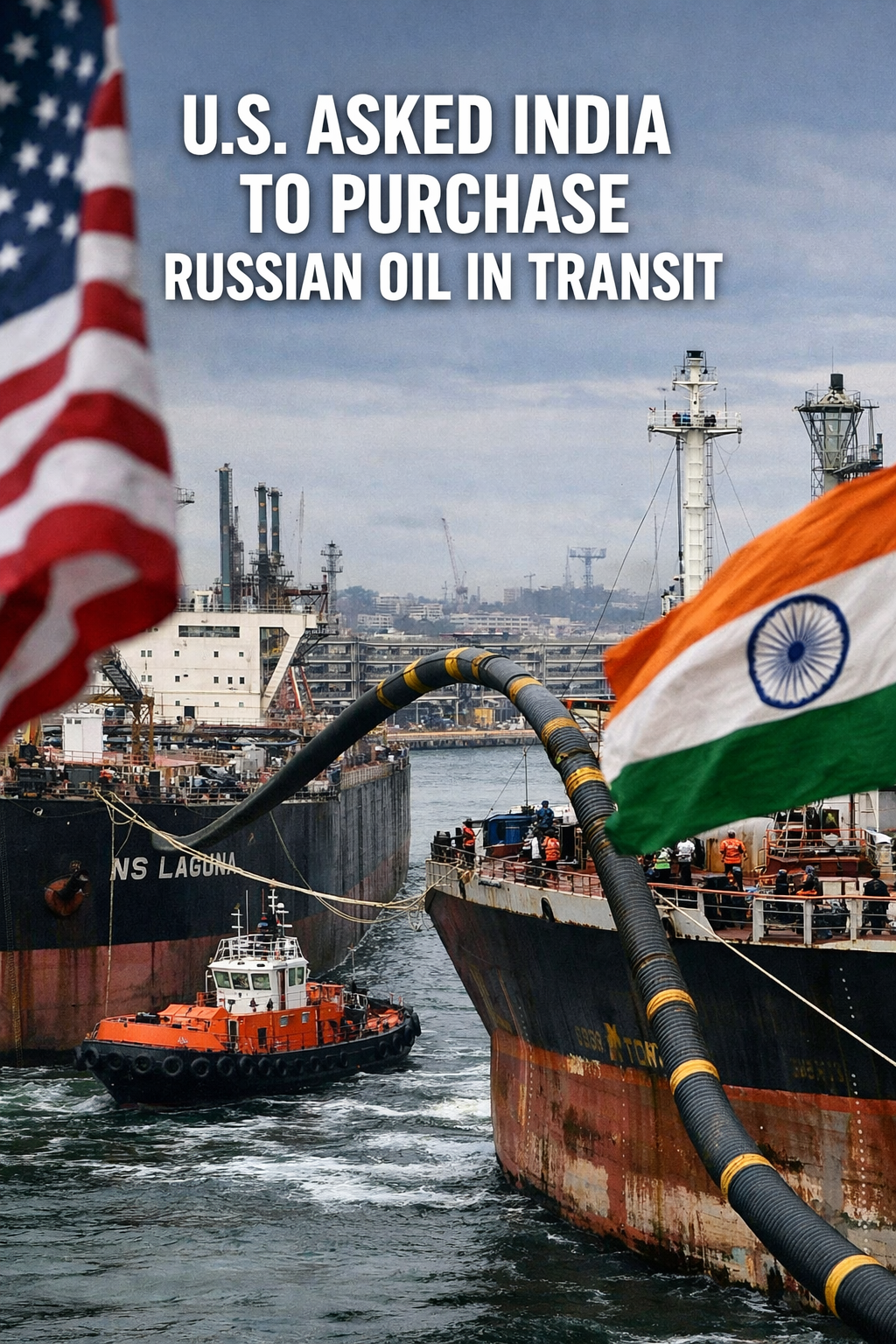
US Urges India to Buy Russian Oil at Sea Amid Global Supply Concerns
In a move aimed at stabilising global oil markets, the United States has encouraged India to purchase Russian crude already floating at sea and redirect it to Indian refineries. Energy Secretary Chris Wright described the measure as a short-term, pragmatic effort to prevent supply shortages and price spikes amid ongoing tensions in West Asia.
Speaking to CNN on Sunday, Wright explained that he and Treasury Secretary Scott Bessent had reached out to Indian authorities about Russian oil cargoes awaiting unloading at Chinese refineries.
“Instead of letting the oil sit for six weeks, we suggested having it land in Indian refineries. This helps calm fears of shortages and keeps price spikes in check,” Wright said, emphasizing that US policy towards Russia remains unchanged.
When asked whether this move contradicts Washington’s broader strategy of isolating Moscow, Wright replied, “It is simply a temporary measure with no policy shift toward Russia.” He also noted that India has adjusted its oil imports, increasing purchases from the US, Venezuela, and other countries.
US Ambassador to the United Nations, Mike Waltz, supported the decision, calling it a practical, temporary measure. He told NBC News, “This is a 30-day pause to ensure millions of barrels of oil don’t remain stranded at sea. In the long term, it reduces the leverage Iran has over global energy supplies.”
The Treasury Department issued a license allowing transactions for Russian-origin crude loaded on vessels on or before March 5. The authorization is valid until April 4, provided the oil is delivered to an Indian port and the purchaser is a legally recognized Indian entity. Importantly, the license does not allow any dealings involving Iranian-origin goods, which remain under existing US sanctions.
Treasury Secretary Bessent added that the measure is part of ongoing efforts to ease temporary supply gaps while keeping the market stable. “There are hundreds of millions of barrels of sanctioned crude at sea. By authorizing their delivery, we can relieve global supply pressure,” he said.
This development underscores the delicate balancing act the US faces in managing energy security, regional conflicts, and global economic stability. While pragmatic, the decision reflects the broader reality of interconnected markets, where even temporary measures can ripple across nations.