

Trump Hosts Right-Wing Latin American Leaders at ‘Shield of the Americas’ Summit to Address Crime, Migration, and Regional Influence
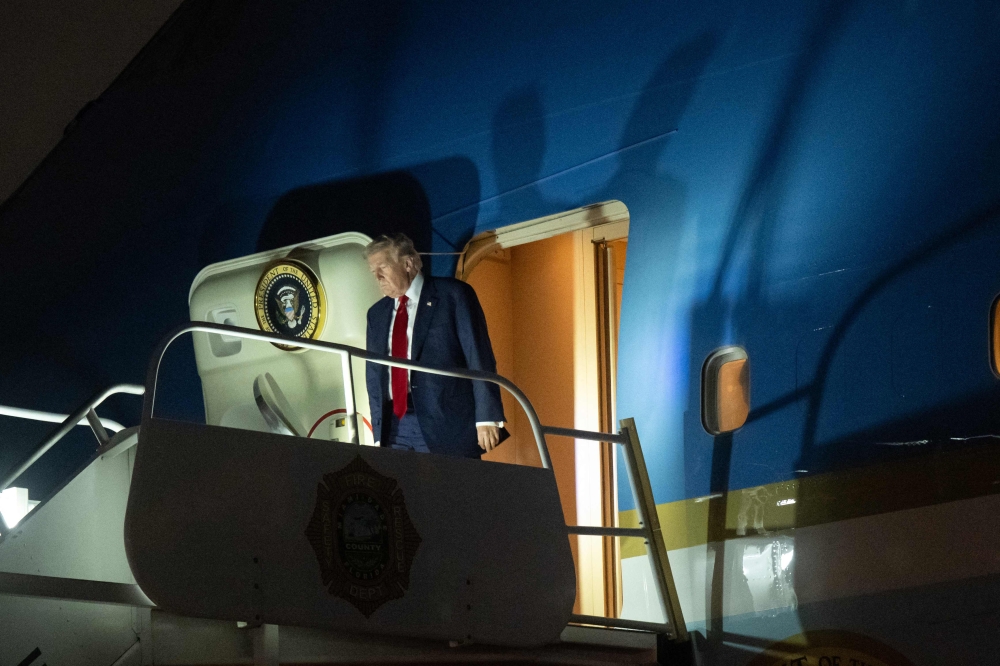
US President Donald Trump convened a high-profile gathering today at his Doral, Florida golf club, welcoming a dozen right-wing leaders from Latin America and the Caribbean for the “Shield of the Americas” summit. The discussions focused on pressing regional issues, including organized crime, illegal migration, and the influence of foreign powers like China in the Western Hemisphere.
This summit represents another bold step in Trump’s so-called “Donroe Doctrine,” reinforcing US authority in Latin America. The gathering follows Trump’s recent moves in Venezuela, where he supported the replacement of former president Nicolas Maduro with Delcy Rodriguez, and his efforts to claim Venezuelan oil reserves for American interests.
The timing comes amid broader global tensions. Trump recently coordinated US strikes alongside Israel in Iran, creating ripple effects in energy markets and destabilizing historically peaceful regions in the Gulf. Analysts note that these moves signal a pattern, with Cuba potentially next in line for increased US pressure.
Key Attendees and Their Goals
Prominent figures at the Florida summit included Argentina’s libertarian president Javier Milei, Ecuador’s Daniel Noboa, and El Salvador’s Nayib Bukele, whose aggressive security policies are considered models for the region.
According to Irene Mia, a Latin America expert at the International Institute for Strategic Studies (IISS), the participating leaders share concerns about the growing influence of drug cartels in countries once considered relatively safe, such as Ecuador and Chile. “All those countries used to be quite secure and didn’t really have an issue with organized crime, but they’ve seen increasing levels of organized crime because of the reconfiguration of the drug trade,” Mia said.
Recent security challenges have helped fuel right-wing victories across Latin America, creating an environment where US intervention meets less resistance than before. Ecuador, for example, has strengthened its ties to Washington under Noboa, with the US recently conducting joint anti-drug operations in the country—a nation that has seen rapid deterioration in safety over just a few years.
Regional Coalition and Challenges
In addition to Milei, Bukele, and Noboa, Trump welcomed leaders from Bolivia, Costa Rica, the Dominican Republic, Guyana, Honduras, Panama, Paraguay, Trinidad and Tobago, and Jose Antonio Kast, Chile’s president-elect. While some leaders benefit directly from US financial support or political endorsements, experts caution that sustaining a conservative coalition across Latin America will be challenging.
“It’s entirely a negative agenda,” Mia explained. “It’s all about the threats coming to the region for US security: migration, organized crime.” She also highlighted significant absences, including Mexico and Brazil, led by leftist leaders Claudia Sheinbaum and Luiz Inacio Lula da Silva, whose territories play critical roles in trafficking networks.
The expert emphasized the delicate balance of US-Latin America relations. “Support for US interests is fragile because the relationship is complex. Whether the population will approve of Trump’s policies—and for how long—remains uncertain.”
Human Angle
Beyond geopolitics, the summit highlights real concerns affecting everyday lives across Latin America: families disrupted by migration, communities living under the shadow of cartels, and nations striving for security and stability. While the summit focuses on high-level strategies and political alliances, its ultimate impact will be felt in the homes, streets, and futures of millions.