


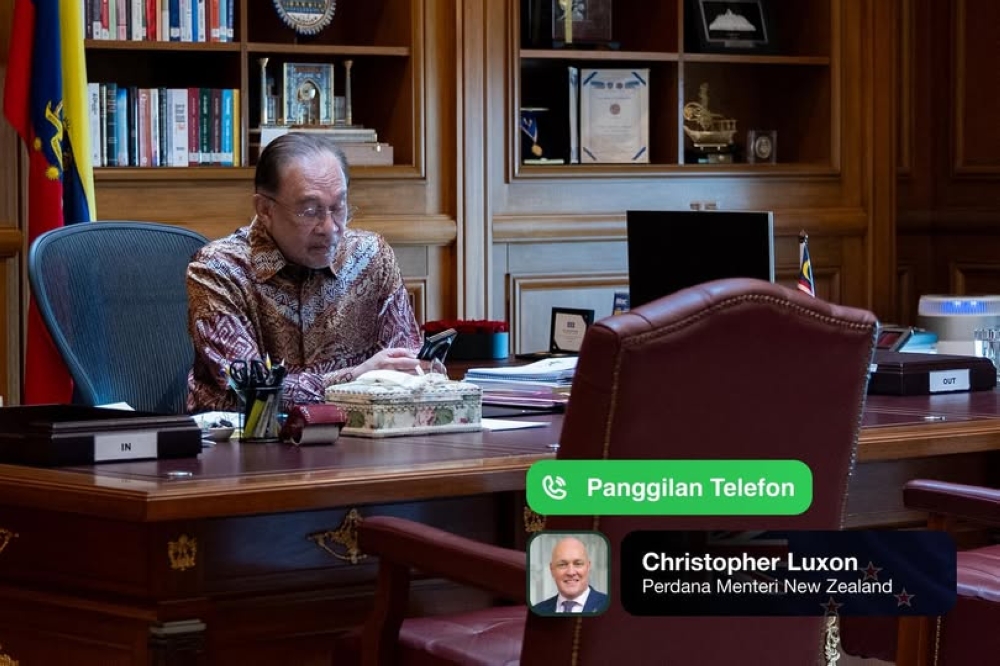
Malaysia’s urgent call for peace: How Anwar Ibrahim and Christopher Luxon’s dialogue on West Asia turmoil signals a turning point for global security
The world is standing at a fragile crossroads, and the consequences of decisions made today will echo across generations. As tensions rise in West Asia and the ripple effects spread across continents, Malaysia has taken a firm and principled stance that demands attention. In a critical moment of diplomacy and global responsibility, Anwar Ibrahim and Christopher Luxon exchanged views on the escalating turmoil affecting international stability, energy markets, and the safety of civilians. Their conversation reflects something far bigger than a bilateral discussion. It represents a call for reason, for humanity, and for urgent global cooperation before the crisis deepens further.
At the heart of this diplomatic exchange lies Malaysia’s unwavering message to the international community: violence cannot be the path forward, and unilateral military actions that violate international law must be rejected. The government of Malaysia has made it clear that peace, diplomacy, and the protection of innocent lives must remain the priority. This is not just a political statement; it is a moral responsibility that nations across the globe are now being challenged to confront.
Prime Minister Anwar Ibrahim emphasized that Malaysia strongly condemns military attacks against Iran and firmly opposes any actions that undermine international law. This position sends a clear signal that the world cannot afford a future shaped by unchecked aggression and escalating conflict. The urgency behind this message is growing stronger as tensions between regional powers threaten to destabilize not only West Asia but the entire global system of security and trade.
During the telephone conversation between the two leaders, both sides discussed the rapidly evolving developments in West Asia and the growing concerns about their impact on global security and economic stability. These discussions are not happening in isolation. Every conflict in a strategic region triggers a chain reaction that reaches far beyond borders. Energy supply chains become fragile. Markets react with volatility. Nations thousands of miles away begin to feel the pressure.
One of the most immediate and visible consequences of the Iran Israel conflict is the strain placed on global energy systems. Rising fuel prices, disruptions in supply routes, and uncertainty in production have already begun to influence economies worldwide. New Zealand, like many countries, is feeling the weight of these changes, with increasing pressure on its domestic economy and energy sector.
Christopher Luxon highlighted the importance of strengthening energy security while accelerating the transition toward renewable energy solutions. This shift is not merely an economic strategy; it is becoming a survival strategy for modern nations. Countries that rely heavily on imported fuel or unstable supply chains are now realizing the urgency of building resilient, sustainable energy systems that can withstand geopolitical shocks.
Malaysia’s leadership welcomed these proactive steps taken by New Zealand. The move toward renewable energy is more than a policy choice; it represents a future where nations are less vulnerable to conflicts that disrupt global resources. Clean energy innovation, strategic energy reserves, and international cooperation are becoming essential pillars of long term stability.
But the conversation between these two prime ministers went beyond crisis management. It reinforced the importance of strengthening bilateral relations under the Strategic Partnership framework between Malaysia and New Zealand. Trade, investment, and energy cooperation were highlighted as critical areas that will continue to shape the relationship between the two countries.
In times of global uncertainty, partnerships become more valuable than ever. Strong diplomatic relationships enable nations to share knowledge, stabilize markets, and coordinate responses to emerging challenges. The commitment expressed by both leaders to remain in close contact shows that diplomacy is still one of the most powerful tools available to prevent escalation and build resilience.
What makes this moment particularly significant is the broader message it sends to the international community. When leaders openly discuss global security challenges and work together on solutions, they create a pathway that other nations can follow. Dialogue replaces hostility. Cooperation replaces isolation. Stability becomes achievable when countries refuse to allow conflict to dictate the future.
However, the reality remains serious. The situation in West Asia continues to evolve rapidly, and its consequences are already spreading across economic systems, energy markets, and international relations. This is why the call for an immediate ceasefire is not just a diplomatic request; it is an urgent necessity.
A ceasefire would provide the critical space needed for humanitarian protection, diplomatic negotiations, and long term solutions that address the root causes of the conflict. Without it, the risks of escalation could draw more countries into the crisis, disrupt global trade routes, and intensify economic instability worldwide.
Malaysia’s voice in this conversation matters. As a nation that has consistently advocated for international law, peaceful resolution of conflicts, and multilateral cooperation, its stance resonates with many countries seeking stability in an increasingly uncertain world.
This moment should push governments, institutions, and citizens everywhere to reflect on the broader implications of global conflict. War is never confined to one region. It affects supply chains, food security, fuel prices, economic growth, and ultimately the daily lives of ordinary people across the globe.
Leaders like Anwar Ibrahim and Christopher Luxon are recognizing that the choices made today will determine whether the world moves toward escalation or toward a future shaped by diplomacy and cooperation. Their dialogue represents a reminder that solutions are still possible, but they require urgency, courage, and collective action.
For policymakers, business leaders, analysts, and global citizens, the message is clear. The time to prioritize peace, energy resilience, and international collaboration is now. Waiting for the crisis to deepen will only make the cost of recovery higher and the path to stability more difficult.
If the world listens carefully to this call for ceasefire and diplomatic engagement, it may still have the chance to prevent a larger global disruption. The stakes are enormous, but so is the opportunity to reshape the future through cooperation and responsible leadership.