


Blasts and Sirens Rock Bahrain as Iran Claims Drone Attack on US Military Base
Bahrain was placed on heightened alert after explosions and warning sirens were reported across the country, following Iran’s announcement that its forces had launched a drone attack targeting a US military installation.
Residents were urged to remain calm, seek shelter and follow official safety instructions as authorities responded to the developing security situation.
According to an AFP journalist on the ground, air raid sirens sounded across Bahrain, while the country’s Interior Ministry issued several public safety alerts through social media. Although officials did not initially identify the source of the threat, residents were advised to move to the nearest safe location.
Explosions were reportedly heard at around 4am local time, equivalent to 9am in Malaysia. A second series of blasts was reported at approximately 6.30am, or 11.30am Malaysian time.
In a statement broadcast by Iranian state media, Iran’s Islamic Revolutionary Guard Corps (IRGC) claimed responsibility for targeting a US radar installation at the Al-Riffa helicopter base in Bahrain.
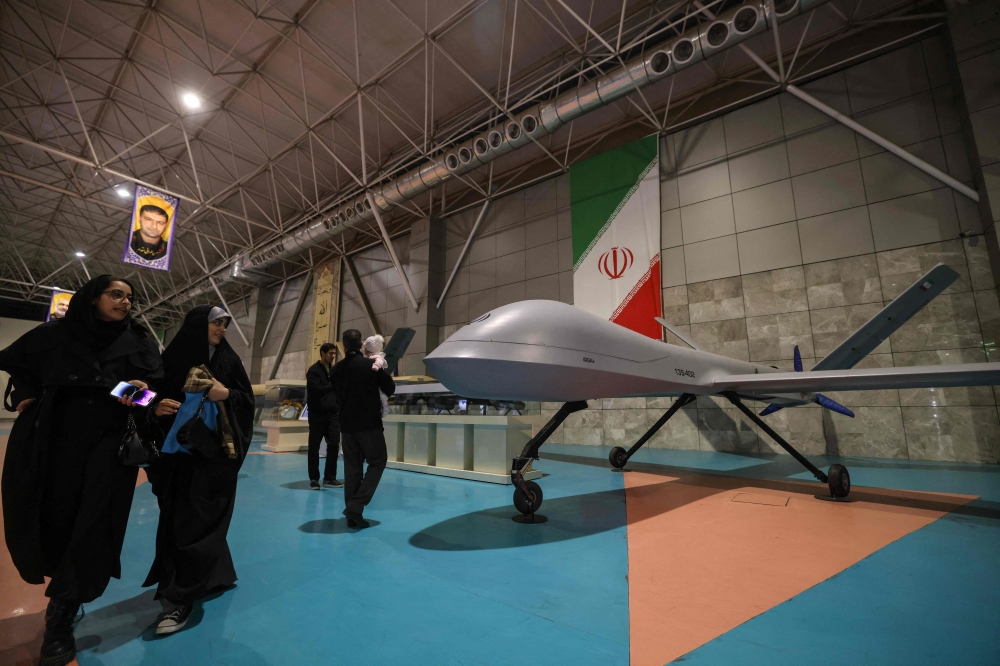
The Guards stated that six drones operated by its Aerospace Force were used in the reported attack, targeting what it described as a US air defence radar system.
The IRGC also issued a warning over the Strait of Hormuz, declaring that any further aggression by the United States would trigger a stronger response.
The Strait of Hormuz remains a critical international shipping corridor, particularly for global oil and energy supplies. Any disruption to maritime traffic through the waterway has the potential to affect international markets, shipping operations and energy security.
Bahrain Faces Growing Regional Security Concerns
Bahrain’s strategic importance makes the latest developments particularly significant. The country hosts a major US naval installation and has become one of several Gulf states affected by the escalating conflict involving Iran, the United States and Israel.
The wider conflict began on February 28, when the United States and Israel launched attacks on Iran, triggering a series of retaliatory military actions across the region.
Over the past eight months, Iran has restricted shipping through the Strait of Hormuz and carried out attacks on several strategic facilities, including airports, seaports, energy infrastructure and US-linked military assets across the Gulf.
The latest reported incident also follows an earlier announcement by Iran’s Revolutionary Guards on Friday, when they claimed to have targeted a US early-warning radar system in Bahrain.
The US military subsequently confirmed that it had intercepted and destroyed two Iranian drones targeting the Gulf island nation. However, the US Central Command (CENTCOM) reported no casualties or damage resulting from that particular incident.
Strait of Hormuz Remains a Major Global Concern
Beyond the immediate military developments, the security situation around Bahrain and the Strait of Hormuz raises wider concerns about international trade and energy transportation.
The US Central Command, which oversees American military operations in the region, stated last month that it had helped Gulf countries export approximately 1.5 billion barrels of oil since the summer through the strategically important waterway.
With the region playing a central role in global energy transportation, continued military escalation could create additional uncertainty for governments, businesses, shipping companies and consumers worldwide.
The Human Impact Behind the Headlines
While military statements, strategic installations and geopolitical tensions dominate international headlines, it is important to remember the people living through these events.
For ordinary families in Bahrain, the sound of sirens and explosions is not simply another international news story. It is a frightening reminder that conflict can reach homes, neighbourhoods and everyday lives without warning.
People want to feel safe, send their children to school, go to work and live without constantly worrying about what might happen next.
As the situation develops, the priority must remain the protection of civilians, clear communication from authorities and every possible effort to prevent further escalation.
The consequences of conflict rarely remain within national borders. They can affect regional stability, international trade, energy prices and the lives of millions of people far beyond the battlefield.
Source: AFP