


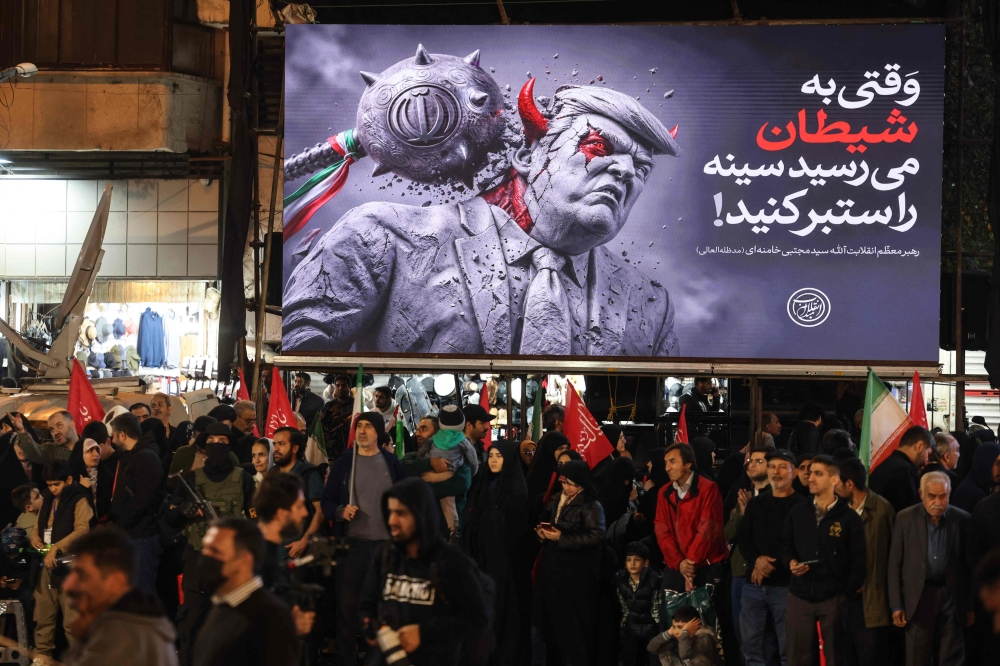
Iran war backlash weakens Trump as Republican midterm defeat exposes growing political pressure
US President Donald Trump is facing mounting political pressure after a major midterm election defeat for Republicans, with his administration’s handling of the Iran war emerging as one of the key issues behind the party’s disappointing performance.
The election results have raised serious questions about Trump’s political direction, particularly as rising fuel prices, economic uncertainty and growing public frustration over the conflict continue to affect American households.
Trump acknowledged on Wednesday that the war with Iran and the resulting increase in gasoline prices had contributed significantly to the Republican Party’s losses. However, despite recognising the political consequences, he maintained that he would make the same decision again.
The results leave Trump in a difficult position. While he faces growing pressure to bring the conflict to an end through diplomatic negotiations, his continued threats to intensify military action against Tehran have created further uncertainty about what comes next.
According to Sina Toossi, a senior non-resident fellow at the Center for International Policy, Trump faces two difficult choices. Escalating the conflict could create further political and economic damage, while pursuing diplomacy may offer an opportunity to end the crisis and limit its consequences.
The situation could become even more challenging when the new Democratic-controlled Congress assumes power in January, giving Democrats greater influence over government oversight and funding decisions.
Vice President JD Vance also directly connected the Republican defeat to the Iran war. In a post on X, he stated that the conflict was the reason behind the party’s losses, pointing to Trump’s own acknowledgement of the issue.
Rising living costs become a major election issue
For many American voters, the election was not simply about political parties or leadership personalities. It was also about the growing cost of everyday life.
Higher fuel prices, expensive transportation and economic uncertainty have placed additional pressure on households and businesses. Even traditionally reliable Republican voters have expressed frustration over the financial consequences of the conflict.
Farmers are among those feeling the impact. Charles Hall, executive director of the North Carolina Soybean Producers Association, explained that rising energy costs, particularly diesel prices, have created serious difficulties for agricultural communities.
He also pointed to significant voting shifts towards Democrats in North Carolina, suggesting that many voters were expressing dissatisfaction with the current political direction.
The economic consequences of the Iran conflict have extended well beyond the battlefield. Following US-Israeli strikes on Iran that began in late February, Tehran retaliated by blocking the Strait of Hormuz, one of the world’s most important routes for international energy transportation.
The disruption sent oil prices higher, adding pressure to global energy markets and increasing fuel costs for consumers.
However, analysts believe the Republican defeat cannot be explained by the Iran war alone.
James Lindsay, a senior fellow at the Council on Foreign Relations, said the election results reflected broader dissatisfaction with Trump’s political agenda. He noted that Trump had returned to office in 2024 promising to make life more affordable, but many Americans now believe their financial situation has become more difficult.
The Iran war further intensified those concerns by pushing up gasoline and diesel prices.
Democrats demand an end to the conflict
The election outcome has strengthened calls from Democratic leaders for the administration to reconsider its approach towards Iran.
Senate Democratic leader Chuck Schumer said the war must end, while Hakeem Jeffries, who is expected to become Speaker of the House, also expressed similar concerns.
Their statements reflect growing political pressure on Trump to demonstrate a clear path towards resolving the conflict.
For the president, however, ending the war may not be as straightforward as announcing a diplomatic breakthrough. Negotiations have yet to produce meaningful progress, while continued military pressure carries the risk of further retaliation.
Analysts have warned that another round of intense attacks could trigger a wider regional confrontation, particularly if Iran responds by targeting military or strategic installations across the Gulf.
James Lindsay cautioned that such developments could quickly spiral beyond Washington’s control.
At the same time, maintaining a US naval blockade in the Middle East places additional demands on American military resources, creating another challenge for an administration already facing domestic political pressure.
The choices ahead are therefore increasingly complicated. Continuing military action could deepen economic and political dissatisfaction, while withdrawing without a clear diplomatic outcome could create its own strategic difficulties.
A political warning Trump cannot easily ignore
The Republican midterm defeat represents more than an electoral setback. It highlights the growing connection between foreign policy decisions and the everyday economic concerns of American voters.
For millions of households, the consequences of an international conflict are not measured only through military developments or diplomatic statements. They are also reflected in fuel bills, transportation costs, food prices and the ability to manage daily expenses.
Trump’s challenge is now to balance national security objectives with the economic expectations of the American public.
The election has delivered a clear political warning: voters want leadership that addresses the problems affecting their lives, not policies that leave them facing greater uncertainty and financial pressure.
Whether Trump chooses diplomacy or further escalation, the consequences will extend beyond Washington and could shape America’s political and economic direction for years to come.
Ultimately, the biggest question facing the administration is no longer simply how to manage the war with Iran. It is whether Trump can regain public confidence while dealing with a conflict that is increasingly becoming a political liability at home.