


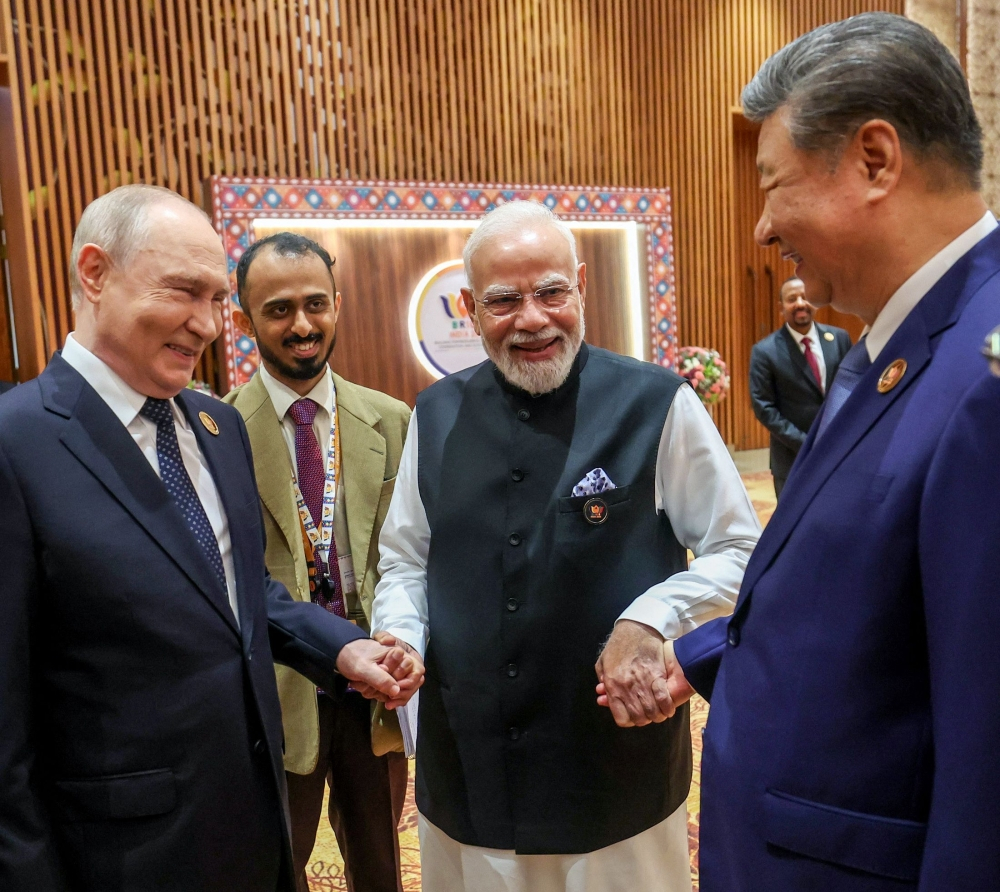
Modi and Xi Call for Peace and Stronger Trade Ties Six Years After Border Clash
Six years after a deadly military clash strained relations between India and China, Indian Prime Minister Narendra Modi and Chinese President Xi Jinping have signalled a renewed commitment to peace, dialogue and stronger economic cooperation.
The two leaders met on the sidelines of the BRICS Summit in New Delhi on Saturday, where they agreed that differences between their countries should not escalate into disputes. The meeting highlighted efforts to rebuild trust and strengthen bilateral relations after years of tension along their disputed border.
According to a statement from India’s External Affairs Ministry, Modi and Xi welcomed the steady progress made in India-China relations since their previous meeting in Tianjin in August 2025. Both leaders emphasised the importance of taking a strategic and long-term approach to their relationship.
Modi stressed that India-China ties should be guided by mutual respect, mutual sensitivity and mutual interest. His message reflected the need for both nations to manage disagreements responsibly while looking for areas where cooperation can benefit their people.
The relationship between the two Asian powers has faced serious challenges since a military clash along the disputed border in 2020. The tensions damaged diplomatic trust and created uncertainty over the future of their political and economic engagement.
Since then, senior military and political officials from both countries have held discussions aimed at easing tensions and improving relations. While disagreements remain, bilateral trade has continued to grow, making the relationship economically important for both nations.
During the BRICS meeting, Modi underlined that peace and tranquillity in the border areas remain essential for the continued development of India-China relations. He called on both sides to respect existing agreements and understandings concerning border-related issues.
The two leaders also reaffirmed their commitment to pursuing a fair, reasonable and mutually acceptable resolution to the boundary question. Their discussions reflected an understanding that lasting progress requires patience, political commitment and consideration of the long-term interests of both countries.
Beyond border issues, the meeting focused on expanding cultural exchanges and strengthening business connections. India and China also agreed on the importance of addressing concerns related to trade imbalances, supply chains and market access.
The scale of their economic relationship highlights why improved ties matter. India recorded a trade deficit of US$112.1 billion, equivalent to approximately RM456.6 billion, with China during 2025–26, out of total bilateral trade worth US$151.1 billion, or around RM615.7 billion, according to government data.
With China set to assume the BRICS chairmanship next year and host the 19th BRICS Leaders’ Summit, the latest meeting could provide an important opportunity for continued engagement between the two countries. However, meaningful progress will depend on whether diplomatic commitments translate into lasting peace along the border and more balanced economic cooperation.
A Moment That Matters Beyond Politics
For millions of people in India and China, peace is not simply a diplomatic phrase. It means families living without fear, businesses planning with confidence and young people growing up with opportunities rather than uncertainty.
The meeting between Modi and Xi is a reminder that even after years of tension, dialogue still matters. Differences may not disappear overnight, but the willingness to communicate can prevent them from becoming something far more damaging.
The real measure of this renewed relationship will not be the words spoken at a summit. It will be the trust built through consistent action, respect for agreements and cooperation that improves everyday lives. A stronger India-China relationship could benefit not only their citizens, but also the wider region and the global economy.
Source: Bernama