


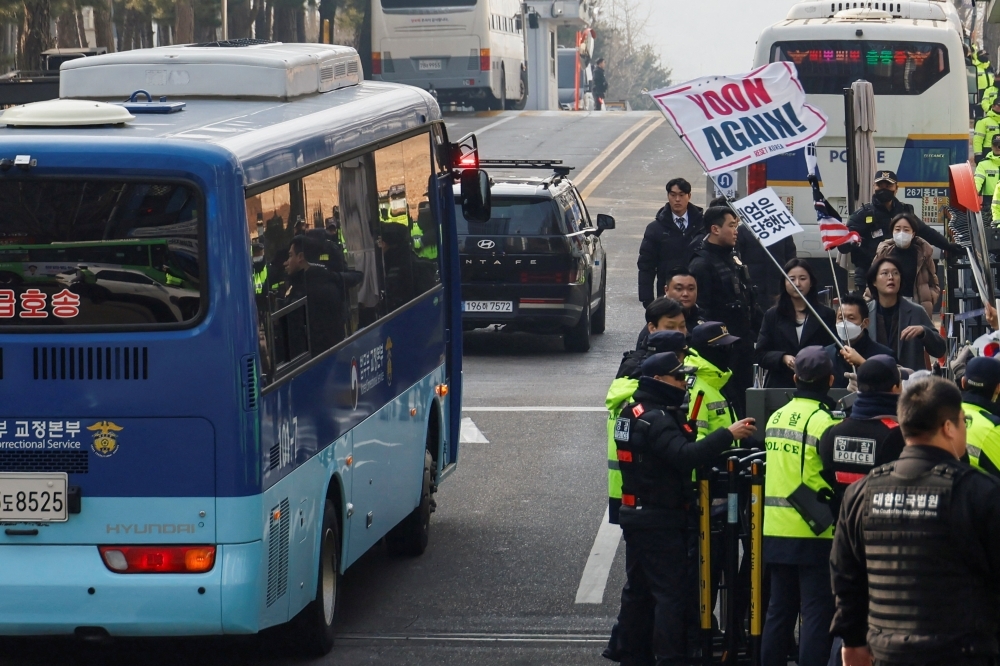
South Korea Sentences Former President Yoon to Five Years Over Martial Law Fallout
In a landmark ruling on Friday, former South Korean President Yoon Suk-yeol was sentenced to five years in prison for obstructing justice and other crimes connected to his controversial martial law declaration on December 3, 2024, and the ensuing political chaos.
The sentencing marks the first of several high-profile verdicts facing Yoon, whose brief suspension of civilian rule sparked nationwide protests and a tense confrontation in parliament.
At Seoul’s Central District Court, Judge Baek Dae-hyun found Yoon guilty of obstructing investigators and excluding key cabinet members from a martial law planning meeting. “Despite having a duty, above all others, to uphold the Constitution and observe the rule of law as president, the defendant instead displayed an attitude that disregarded the Constitution,” Judge Baek said. “The defendant’s culpability is extremely grave.”
Yoon, however, was acquitted of forging official documents due to insufficient evidence. He has seven days to file an appeal. Prosecutors had sought a 10-year prison term, while Yoon continued to assert that he had broken no law.
Yoon Remains Defiant
This ruling comes as prosecutors in a separate case have called for the death penalty, labeling Yoon the “ringleader of an insurrection” for his martial law actions. Although South Korea has not carried out executions since 1997, the call for the harshest penalty underscores the gravity of the accusations.
Yoon appeared unfazed in court, smiling as prosecutors demanded the punishment. In a statement earlier this week, he defended his actions, insisting his martial law declaration was a lawful exercise of presidential authority. “The exercise of a president’s constitutional emergency powers to protect the nation and uphold the constitutional order cannot be deemed an act of insurrection,” he said, accusing the opposition of imposing an “unconstitutional dictatorship” through legislative control.
The court is set to rule on the insurrection charges on February 19. Meanwhile, Yoon faces additional trials, including allegations of aiding the enemy, over drone flights near North Korea that bolstered his case for martial law.
This historic judgment serves as a powerful reminder of the weight of presidential responsibility and the enduring strength of South Korea’s democratic institutions. Even as Yoon faces legal battles, the nation watches closely, grappling with the balance between executive power and constitutional accountability.