


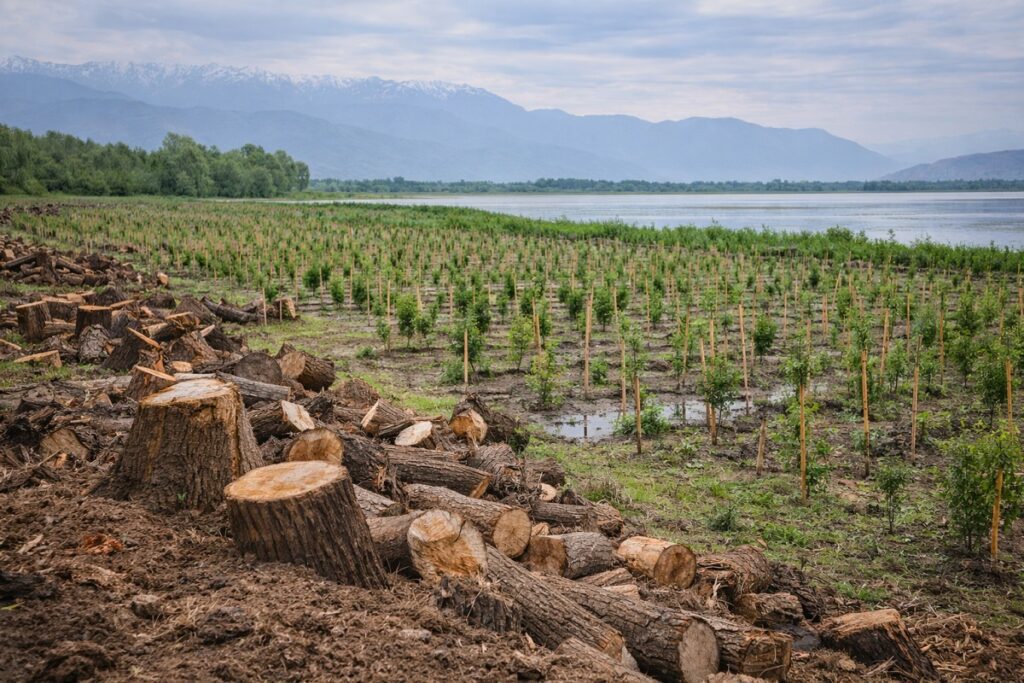
1.35 Lakh Willows Removed at Wular Lake, 19 Lakh Saplings Raised: J&K Govt Calls It Ecological Restoration, Not Deforestation
In a significant update presented in the Legislative Assembly, the Jammu and Kashmir government revealed that nearly 1.35 lakh willow trees have been removed in and around Wular Lake as part of a carefully planned ecological restoration drive. At the same time, authorities confirmed that more than 19 lakh saplings have been raised in the catchment area to balance environmental concerns and strengthen the region’s ecosystem.
Responding to a query raised by MLA Irshad Rasool Kar, the minister-in-charge explained that under the Comprehensive Management Action Plan for Wular Lake, 1.91 lakh willow trees were identified for removal in the first phase, out of which approximately 1.35 lakh have already been felled.
Restoration, Not Deforestation
The government clarified that the move should not be viewed as deforestation. Instead, officials described it as a habitat management initiative designed to restore Wular Lake’s original wetland ecosystem. According to the minister, the plan does not involve blanket cutting. Rather, it focuses on selective and need-based removal, aligned strictly with ecological objectives and long-term conservation goals.
Authorities informed the House that the total number of willow trees in and around Wular Lake is estimated between 19 to 21 lakh, and the current removal process is being carried out in a phased and strategic manner based on environmental assessments and management requirements.
Revenue and Financial Transparency
The exercise has also generated financial returns. The government disclosed that the removal of willow trees has resulted in approximately Rs 31.95 crore in revenue, which has been deposited under official government receipts in accordance with financial regulations.
Compensatory Measures and Catchment Development
Highlighting compensatory efforts, officials stated that over 19 lakh plants have been raised in the Wular catchment area since the establishment of the Wular Conservation and Management Authority in 2012.
In the Bandipora catchment alone, more than 2,900 hectares have undergone treatment through afforestation, plantation drives, and soil conservation measures. These initiatives aim to stabilise slopes, prevent erosion, and significantly reduce sediment flow into the lake — a major factor affecting Wular’s shrinking water capacity.
A Lake at the Heart of Kashmir
Wular Lake, one of Asia’s largest freshwater lakes, plays a crucial role in flood control, fisheries, biodiversity, and the livelihoods of thousands of families. Over the years, encroachments, siltation, and unchecked vegetation growth have altered its natural structure.
The government maintains that the current plan seeks to restore the lake’s hydrological balance, improve water retention capacity, and protect biodiversity, while simultaneously strengthening long-term environmental resilience.